The Musty Smell Is Back — Attic Mold When the Furnace Kicks On
Why the attic mold smell shows up in fall
Attic mold grows in winter and gets noticed in October. The two are months apart, which is why the smell feels like it came from nowhere.
Winter is when it grows. Warm, damp air from the house leaks into the attic through can lights, bath fans, and the attic hatch. It hits the cold underside of the roof and turns to frost or condensation. Wet wood plus a few weeks is all mold needs. A bath fan that vents into the attic speeds it up.
Summer hides it. The attic dries out and the mold goes dormant. The windows are open and the furnace is off. Nobody smells a thing.
October delivers it. You close the windows and the furnace runs for the first time. Now the house is a sealed box with a fan in it. Attic air gets pulled down in two ways:
- Leaky ducts. If your furnace or ductwork runs through the attic, gaps on the return side suck attic air straight into the system. It comes out of every vent in the house.
- Pressure. Bath fans, the dryer, the range hood, and the furnace itself push air out of the house. Replacement air comes in wherever it can, including down through the same ceiling gaps that let the moisture up.
So the smell at the first furnace run is often a full year old. The growth happened last winter. This winter will add to it.
Is it the attic? How to read the smell
Not every furnace smell is mold, and not every musty smell is the attic. Rule out the easy ones first.
What you smell
Likely source
What to do
Hot, dusty, slightly burnt. Gone in a day or two.
Dust burning off the heat exchanger
Nothing. This is normal at the first run of the season.
Musty only near one vent or the furnace itself
Dirty filter or damp ductwork
Change the filter. Have the ducts looked at if it stays.
Musty and strongest on the ground floor
Crawl space or basement moisture
Check the crawl space for standing water or a torn vapor barrier.
Musty and strongest upstairs or near the attic hatch
Attic
Look in the attic. See the signs below.
Musty every time the furnace runs, all season
Attic air or crawl space air entering the ductwork
Get an inspection. This one does not go away on its own.
Two quick tests. Stand under the attic hatch and sniff, then crack the hatch and sniff again. If the smell jumps, you have your answer. Then run the bath fans and dryer with the windows shut. If the smell gets stronger, the house is pulling air down from the attic.
Signs of attic mold
You can check most of these from the hatch with a flashlight. You do not need to crawl around.
- Dark staining on the roof sheathing. Black, gray, or brown blotches on the underside of the roof. It is usually worst on the north side and near the eaves.
- White or gray fuzz on the rafters or trusses.
- Rusty nail tips. Roofing nails that poke through the sheathing rust when frost forms on them all winter. Rust rings on the wood around them mean repeated moisture.
- Matted, stained, or damp insulation. Look below bath fans and around the hatch.
- A bath fan duct that ends in the attic. If the flex duct just lies on the insulation or points at a vent, that fan is feeding the mold.
- Blocked soffit vents. Insulation stuffed tight into the eaves chokes off the airflow that dries the attic.
- The smell itself. Earthy and damp, like old cardboard. Stronger in the attic than in the house.
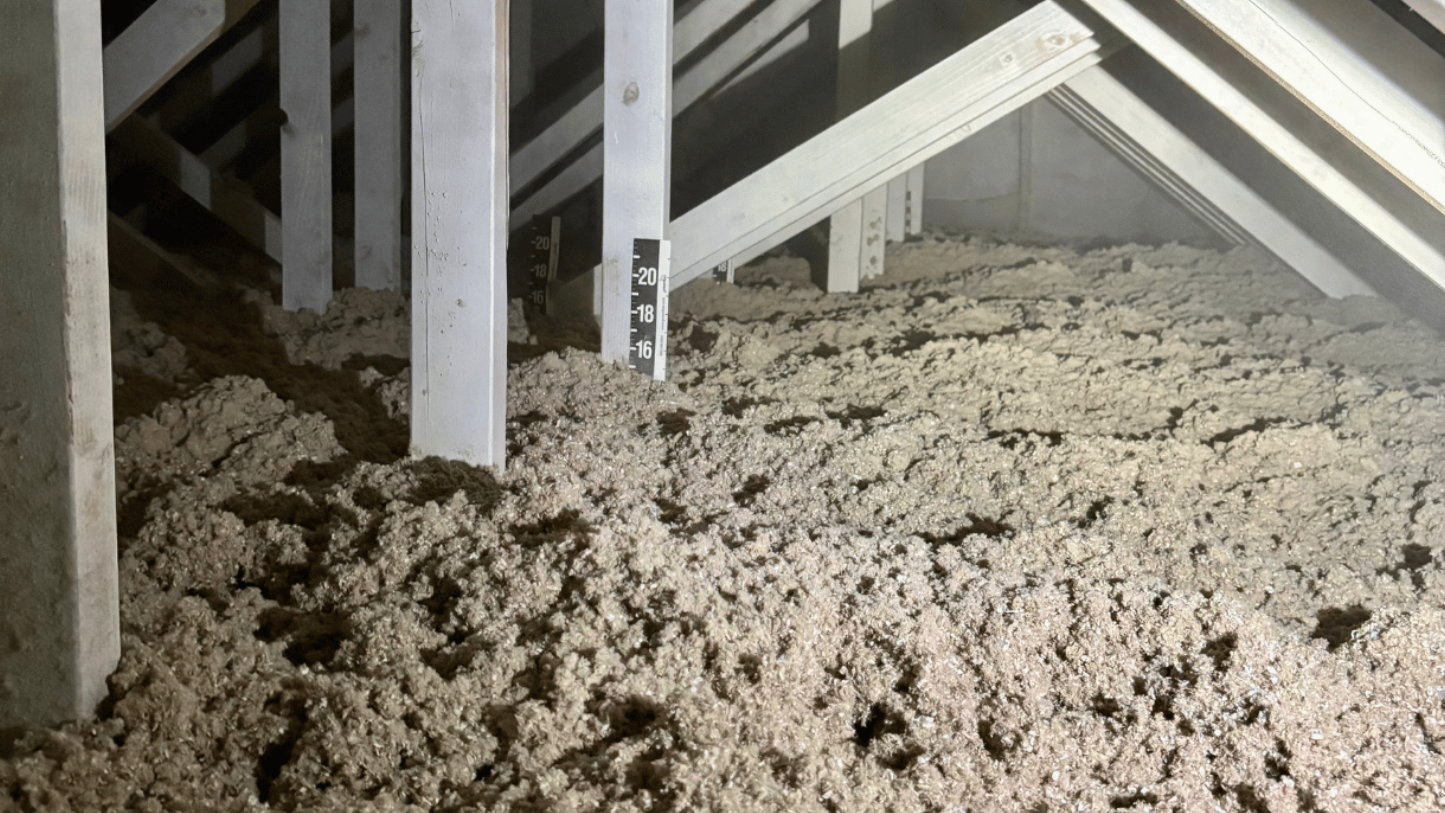
One caution. If the insulation is loose, pebbly, and gray-gold like kitty litter, it may be vermiculite. Do not disturb it. Close the hatch and read this first.
Our 20-minute attic check covers the rest of what to look for before winter.
What a mold inspection in Spokane should cover
A mold inspection should answer two questions: is it mold, and why is it there. The second one matters more. Mold that gets treated without fixing the cause comes back.
Our inspection is free. Here is what we look at.
- The roof sheathing and framing. How much is affected and where it is concentrated. The pattern points to the cause.
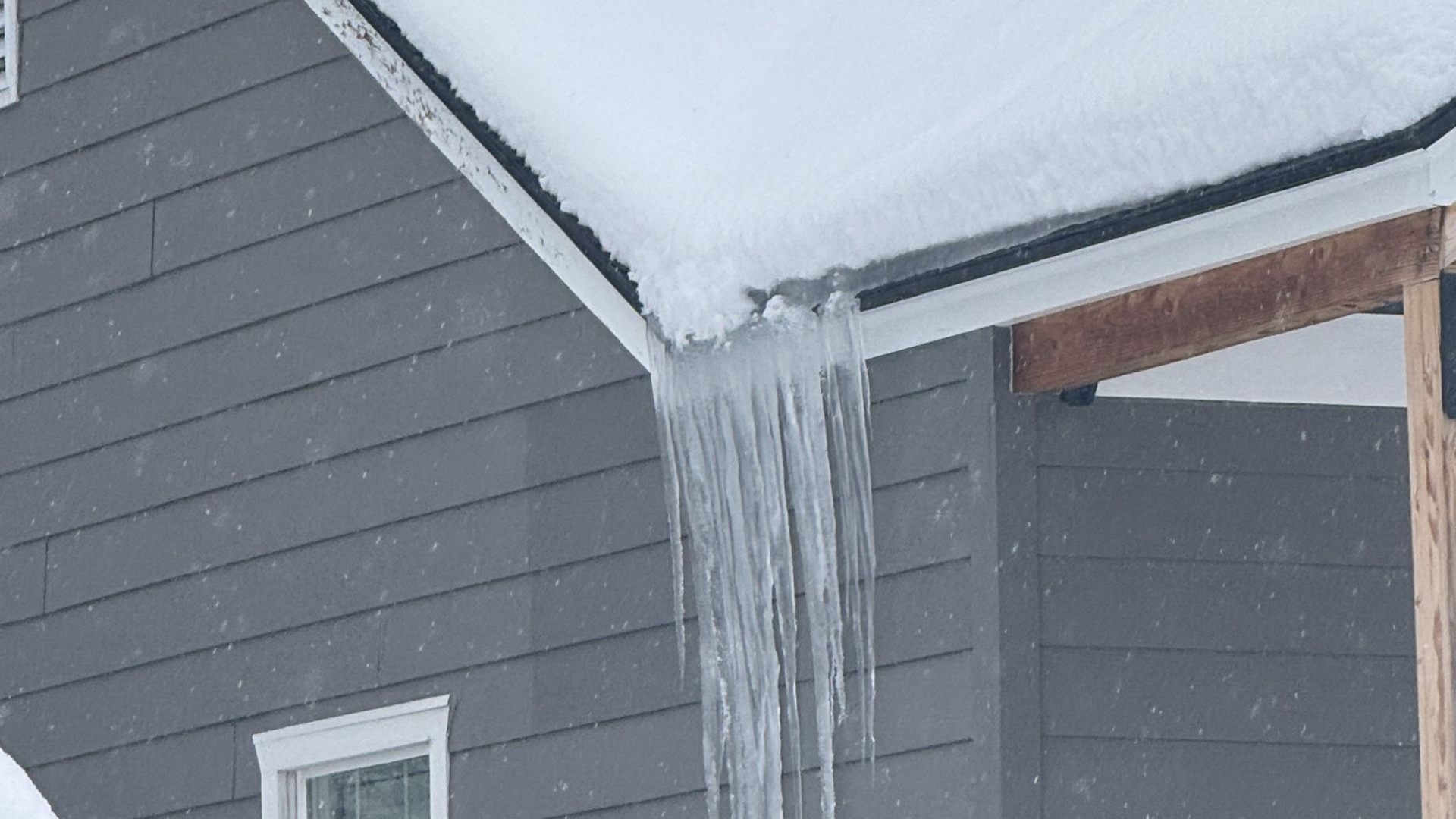
- The moisture source. Bath fan and dryer ducting, air leaks from the house, roof leaks, and signs of past ice dams.
- Ventilation. Whether the soffit and roof vents are open, balanced, and enough for the attic.
- Insulation. Depth, condition, and whether it is contaminated.
- Ducts and the attic hatch. The paths that carry attic air back into the house.
You get photos of what we found and a written plan with pricing. If it turns out to be a dirty furnace filter, we will tell you that too.
How attic mold remediation works
Attic mold remediation is a two-day job. You stay in the house the whole time.
Day 1: remove, treat, fix the cause
- Containment. We seal off the path between the attic and the house so nothing travels into your living space.
- Insulation removal. The contaminated insulation is vacuumed out through a hose to a machine outside. It never comes through the house.
- Antimicrobial treatment. The sheathing and framing are treated with an EPA-registered antimicrobial.
- Cause correction. Bath fans get ducted outside. Air leaks from the house get sealed. Ventilation gets opened up or added.
- Encapsulation. The treated wood is sealed with a coating that locks down staining and resists future growth.
Day 2: re-insulate
We start at 7:00 am and blow in fresh Clean Fiber cellulose to R-49 or R-60. By the afternoon the attic is clean, dry, sealed, and better insulated than the day the house was built.
We wrote up the full walkthrough in Attic Mold Remediation, Step by Step.
Frequently asked questions
Why does my house smell musty only when the furnace turns on? The furnace moves air that was sitting still all summer. If attic or crawl space air is leaking into the ducts or down through the ceiling, the blower spreads it through every room.
Will the smell go away on its own? A burnt-dust smell will, in a day or two. A musty smell that comes back every time the furnace runs will not. The source is still there.
Can I just spray it with bleach? No. Bleach does not soak into wood, so it lightens the stain and leaves the growth. It also does nothing about the moisture that caused it.
Is attic mold a problem if I never go up there? Yes. The smell you notice is attic air reaching your living space. It also comes up in home inspections, and it can stall a sale.
Should I wait until spring? No. Winter is when attic mold grows. Fixing the cause in October stops this season's growth before it starts.
Does homeowners insurance cover attic mold? It depends on the cause and your policy. We document what we find so you have what you need to ask your insurer.
Find out what that smell is
If the furnace came on and the house smelled wrong, do not wait for it to fade. A free mold inspection tells you whether it is the attic, what caused it, and what it takes to fix. We show up when we say we will, and you get the answer in writing.
Call or text (509) 879-0495 or schedule an inspection online.
Pacific Insulation & Mold Remediation. Veteran-owned, local, licensed and insured in Spokane and Coeur d'Alene since 2012. WA Lic. #PACIFIL886KH. ID Lic. #RCE-47538. 135+ five-star Google reviews.
Everything Attic. Except Bats. We're Terrified of Bats.
For More Information: Click Here
Follow us