Smoke Damaged Insulation Removal & Replacement in Spokane
We provide expedited inspections for homes impacted by wildfire smoke damage, immediate exact quotes for removal, treatment and reinsulating so you know what to expect.
Can Smoke-Damaged Insulation Be Cleaned?
Understanding Insulation Cleaning
When it comes to smoke-damaged insulation, the answer is clear: cleaning is not an option. Insulation is designed to trap air in tiny pockets, which unfortunately also means it traps soot, ash, and harmful smoke VOCs throughout its entire depth. The only effective solution is complete removal and replacement.
Can smoke-damaged insulation be cleaned?
No, smoke-damaged insulation cannot be effectively cleaned. Any contractor suggesting otherwise is likely offering a surface deodorizing treatment rather than a true solution.
The contamination from smoke penetrates deep into the insulation material, making it impossible to fully clean. The only reliable fix is to remove all affected insulation and replace it with new material.
Why is replacement necessary?
Insulation works by trapping air, and this design means that soot and ash can become embedded throughout the material. Surface treatments only address the top layer, leaving deeper contamination intact.
Insurance policies typically cover replacement costs because adjusters understand that cleaning does not resolve the underlying issues caused by smoke damage.
What does the replacement process involve?
The replacement process includes vacuuming out all existing insulation, treating the exposed framing, air sealing, and then re-insulating with fresh blown-in cellulose.
This comprehensive approach ensures that your home is not only free from smoke damage but also energy-efficient and comfortable.
How can I prevent future smoke damage?
To prevent future smoke damage, consider installing smoke detectors and maintaining proper ventilation in your home. Regular inspections can also help identify potential issues before they escalate.
Additionally, working with professionals for insulation upgrades and air sealing can enhance your home's resilience against smoke and other contaminants.
What are the signs of smoke damage?
Signs of smoke damage include a persistent odor, discoloration of walls or ceilings, and visible soot on surfaces. If you notice these signs, it's crucial to address them promptly.
Ignoring smoke damage can lead to more significant health risks and structural issues over time.
Can I handle the replacement myself?
While some homeowners may consider DIY insulation replacement, it is highly recommended to hire professionals. Proper removal and installation require specialized equipment and knowledge to ensure safety and effectiveness.
Professionals can also help navigate any potential complications, such as mold growth or structural damage, that may arise during the process.
Insulation Removal & Replacement — What's Included
Every smoke job is a complete insulation removal and replacement, not a top-off. We remove all blown-in cellulose, blown-in fiberglass, and batt insulation down to bare framing using truck-mounted, high-CFM vacuums with sealed hoses — the contaminated material never travels loose through your home. After treatment and air sealing, we replace it with fresh Clean Fiber cellulose blown to R-49 or R-60, meeting Washington energy code and qualifying for Avista's insulation rebate.
The same removal and replacement process applies whether your insulation is smoke-damaged, mold-contaminated, rodent-damaged, or simply decades old and settled. If you're not sure which applies to your attic, a free inspection settles it.
Why do I need to have my insulation replaced?
Indoor air quality and health
The insulation becomes a reservoir of fine particulate — soot, ash, and PM2.5 — plus whatever the fire burned. When structures burn (900+ in the August fires), the smoke carries combustion products from plastics and treated lumber, and consumer advocates have flagged heavy metals like lead and cadmium in the residue. Attics aren't sealed from the house: every furnace cycle pulls attic air down through can lights, fan housings, and the hatch, so that reservoir sheds into your living space indefinitely. The people who feel it first are kids, asthmatics, older adults, and anyone with allergies — usually as congestion, irritated eyes, headaches, or a cough that doesn't track with the season.
The odor cycle
Smoke VOCs bond chemically to porous material and re-release with heat. So the smell fades in fall, and homeowners think it resolved — then the attic hits 130–140° the first warm week of spring and the house smells like August again. That cycle repeats every year the insulation stays. And the absence of smell in cool weather isn't evidence of a clean attic; the particulate is there whether or not you can smell it.
HVAC contamination
If ducts or the air handler run through the attic, leaky joints pull contaminated attic air into the system and distribute it to every room. Duct cleaning helps for a while, then the source reloads it. Filters load up faster, and the system effectively becomes a delivery mechanism for the attic.
The financial clock
Smoke damage to insulation is generally a covered insurance loss right now, while claims are open and causation is obvious. Policies carry deadlines for filing and for collecting recoverable depreciation — often 180 days to a year. Wait two years and you're paying cash for the same removal, possibly while arguing with an adjuster about whether the contamination even came from these fires. The performance cost runs in parallel: soot-loaded insulation is also degraded insulation, and it still settles, still takes on moisture, still hosts whatever mold or rodent problems were coming anyway. Those jobs eventually merge into one bigger bill.
Resale
This is where it surfaces for people who ignore everything else. Buyers walk in on a warm afternoon and smell it. Inspectors are now photographing ash film on attic insulation and writing "smoke contamination — recommend evaluation" into reports, especially near the burn areas. That line becomes a repair credit, a price cut, or a walked deal, and it costs more than the removal would have. It also lands on your seller's disclosure once you know about it.
The short version: the attic doesn't heal. The insulation is a filter that captured a wildfire, and everything downstream — air, odor, HVAC, claim value, sale price — flows from whether that filter gets replaced or left in place.
Air Quality
Odor Cycle
Financial Clock
Resale
The Pacific Insulation Smoke Damage Process
Step 1: High-CFM industrial vacuum removal
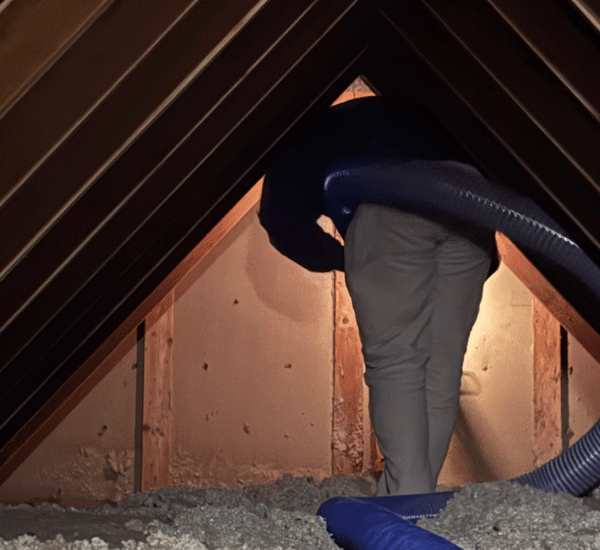
Smoke-contaminated insulation can't be cleaned — the soot and odor are trapped through the full depth of the material — so all of it comes out. We remove it with high-CFM industrial vacuums that pull the insulation out of the attic and into a sealed collection system at the truck outside. Nothing contaminated travels through your home, and the attic comes down to bare framing and drywall, exposing every surface the smoke touched.
Step 2: Vital Oxide treatment
With the attic bare, every affected surface — framing, sheathing, top plates, and the attic floor — is treated with Vital Oxide, an EPA-registered disinfectant and odor eliminator. Unlike fragrances and fogging deodorizers that mask smoke smell, Vital Oxide neutralizes odor at the molecular level, breaking down the smoke compounds bonded to the wood instead of covering them up. It kills mold and bacteria on contact, and it does it without harsh chemicals — no bleach, no ammonia, safe around families and pets.
Step 3: Air sealing
Before the new insulation goes in, we seal the pathways that let attic air into your living space in the first place: top plates, can lights, plumbing and wiring penetrations, fan housings, and the attic hatch. This is the step that stops any future attic problem — smoke, dust, odor — from drifting into your home, and it's also the single biggest driver of heating-bill savings. It's the step cheap bids skip, and it only gets done right when the attic floor is bare.
Step 4: Fresh Clean Fiber cellulose
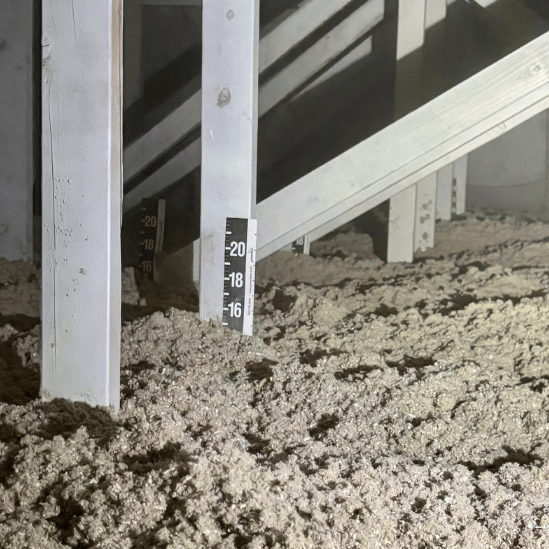
We re-blow the attic to R-49 or R-60 with Clean Fiber cellulose — recycled, borate-treated, and naturally resistant to mold, rodents, and fire. Your attic ends the job cleaner, tighter, and better insulated than before the fires, with before-and-after photos and documentation written for your insurance adjuster.


Maximize Your Insurance Settlement
Navigating the complexities of insurance claims after contamination can be daunting. At Pacific Insulation & Mold Remediation, we guide you through the process to ensure you receive the full compensation you deserve. From prompt documentation to detailed contractor estimates, we help you avoid common pitfalls and secure a fair settlement.
What should I do first if I suspect contamination?
Immediately document the situation. Take photos of any visible contamination, such as ash or soot, and call in your claim. Prompt notice is crucial for establishing causation, especially after incidents like fires.How does the adjuster estimate my loss?
Adjusters use software like Xactimate to build estimates, but these often miss critical elements required for contamination jobs. Ensure your contractor provides a detailed estimate that includes all necessary line items.What is the difference between ACV and RCV?
Actual Cash Value (ACV) is the replacement cost minus depreciation, while Replacement Cost Value (RCV) is the full cost of replacement. Understanding this can help you avoid misinterpretations of your settlement offer.How can I ensure my settlement covers actual costs?
Obtain a detailed contractor estimate before negotiations. This should include specific line items for removal, disposal, treatment, and re-insulation, making it easier for adjusters to see what's missing from their scope.What if my claim is disputed?
Put all disputes in writing, including your claim number and specific line items in question. If necessary, escalate the issue through the policy's appraisal clause or by contacting a licensed public adjuster.
Stay Informed About Your Claim
Understanding the intricacies of your insurance claim can make a significant difference in the outcome. Get an estimate so you have actual costs prior to a lowball settlement offer.