Frost in the Attic: The Science of Attic Condensation in Spokane (And Why It Looks Like a Roof Leak)
Warm air carries water. Cold surfaces take it back.
If you climbed into your attic on a clear November morning and found the roof deck coated in white frost, you don't have a roof leak. You have a physics problem, and it starts in your bathroom.
Every winter we get the same call around the first hard freeze: brown spot on the ceiling, wet insulation, a roofer who found nothing wrong with the shingles. Nine times out of ten the water came from inside the house. Here's how it got up there.
Warm air carries water. Cold surfaces take it back.
Air holds water vapor in proportion to its temperature. Air at 70°F and 40% humidity, which is a normal Spokane living room in November, carries a dew point around 45°F. That number is the whole story. Any surface colder than 45°F that this air touches will pull the moisture out of it as liquid water. If the surface is below 32°F, it freezes on contact as frost.
Your roof sheathing in November is routinely 20–30°F on a clear night. On a cloudless night it is actually colder than the outside air, because the roof radiates heat straight up into the sky and nothing radiates back. That is why frost shows up on your windshield before it shows up on the ground, and why the north slope of the attic frosts while the south slope stays dry: the sun burns it off the south side every afternoon and never reaches the north.
So the question is never whether the roof deck is cold enough. In Spokane, from November through February, it always is. The question is how much house air is reaching it.
The stack effect: your house is a chimney
Warm air rises. In a heated house in winter, that creates a steady upward pressure at the ceiling and a slight vacuum at the floor. Cold outside air gets pulled in low through rim joists and crawl space vents, warms up, picks up moisture from showers, cooking, breathing, plants, and the dryer, and then pushes out through every gap in the ceiling plane. Building scientists call these gaps attic bypasses. Homeowners call them light fixtures.
The usual culprits, roughly in order of how much air they move:
- The attic hatch or pull-down stairs — a 10-square-foot hole with a piece of plywood over it
- Bathroom exhaust fans that vent into the attic instead of through the roof (we find this in a third of Spokane attics built before 1990)
- Recessed can lights, especially older non-IC-rated cans
- Plumbing stacks, furnace flues, and chimney chases that run from the basement straight to the attic
- Top plates of interior walls, where drywall never meets the framing cleanly
- Wire penetrations, duct boots, and the gap around the furnace supply trunk
One bath fan dumping into the attic can push several gallons of water vapor into that space in a week of normal family showers. In November, all of it lands on the sheathing as frost.
Why it looks like a roof leak in December
Frost is harmless while it stays frozen. The damage happens on the first warm day — a 45°F afternoon after a week of 20s — when the whole accumulation melts at once. It drips onto the insulation, soaks through, and shows up as a stain on the ceiling or a drip from a light fixture. The homeowner calls a roofer. The roofer finds nothing. The stain comes back in January.
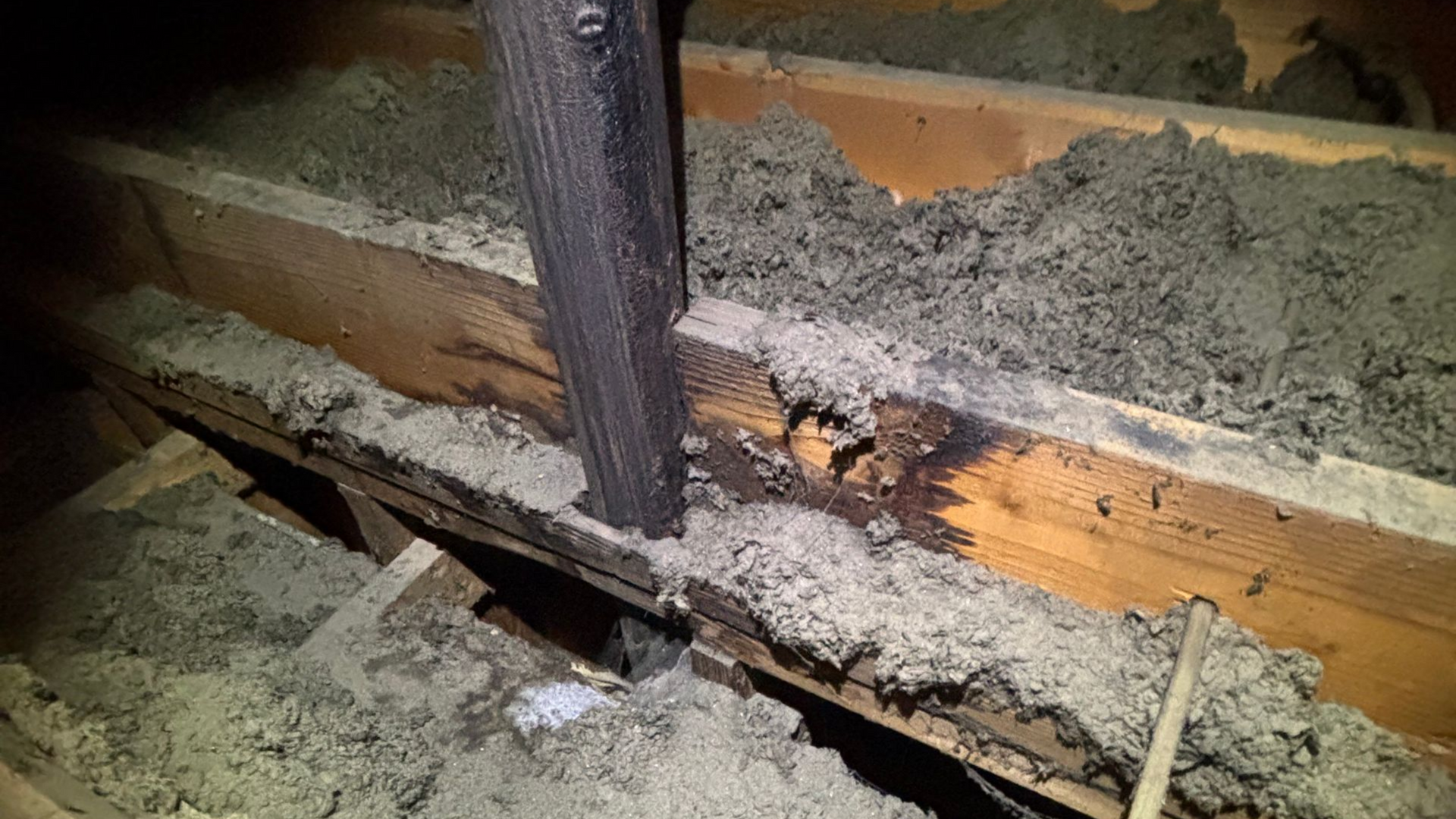
In a bad year the sheathing stays wet long enough for mold to establish on the underside of the deck, usually a black speckle pattern on the north slope first. Once that happens, this stops being an air sealing job and becomes a mold remediation job.
Why adding insulation alone makes frost worse
This is the part that surprises people. If you blow another foot of insulation into a leaky attic without sealing the ceiling plane first, you make the attic colder. A colder attic means a colder roof deck, which means more condensation, not less. The leaks are still there, now buried under 18 inches of cellulose where nobody can find them.
That's why the right order is always: find and seal the leaks, fix the ventilation, then insulate. And it is why, when the existing insulation is already frost-wet or the sheathing has mold, we remove it first. You cannot air seal a ceiling you can't see.
The fix, in the order it has to happen
1. Get the moisture out of the house. Run bath fans for 20 minutes after every shower. Make sure every fan and the dryer vent terminate outside, not in the attic. Check that the crawl space is dry and has a vapor barrier; a wet crawl space is the number one hidden source of attic frost in this area.
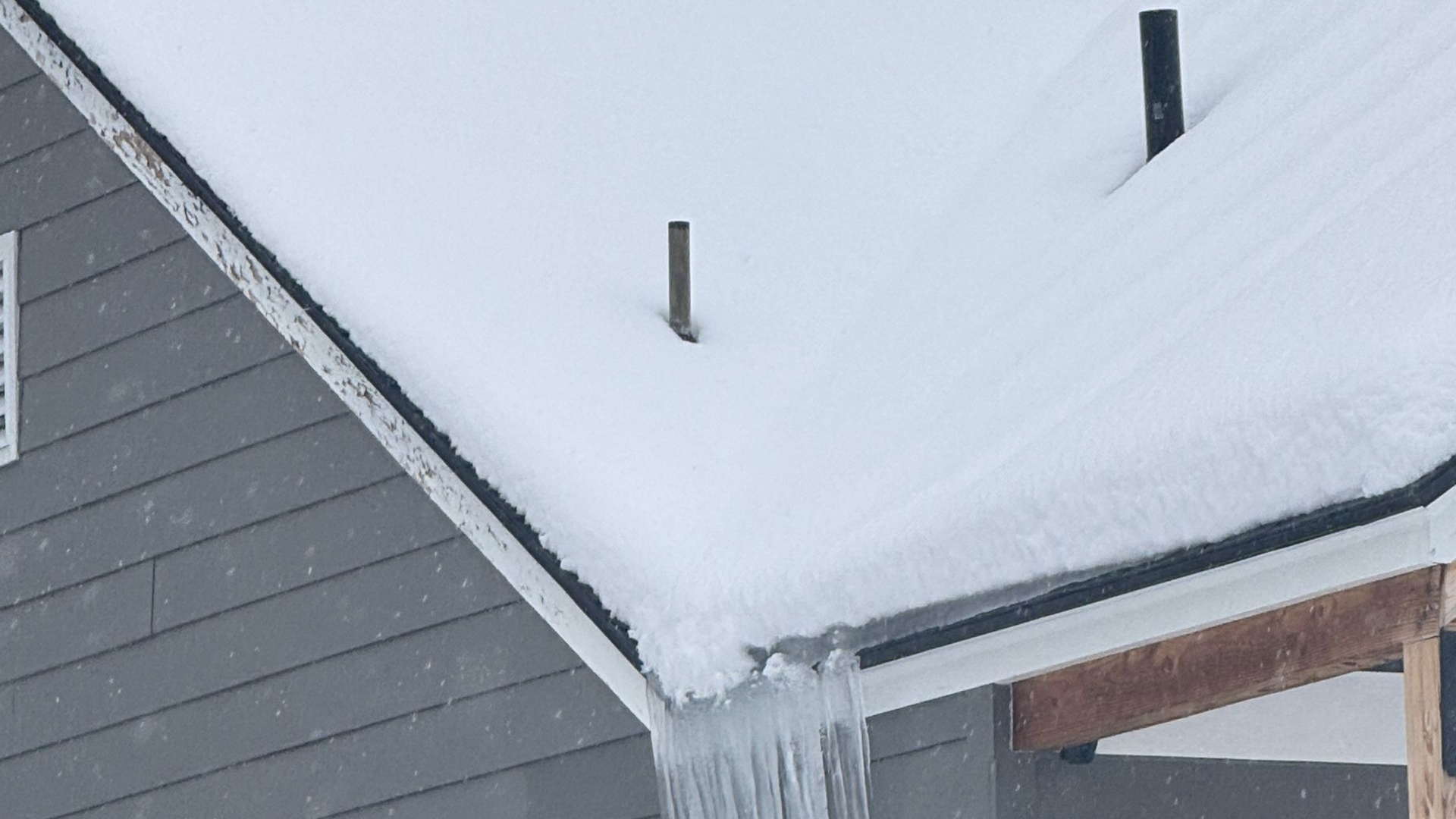
2. Seal the ceiling plane. Weatherstrip and insulate the hatch. Cover can lights with fire-rated boxes or swap them for sealed LED retrofits. Foam every penetration. Seal the top plates. This is the step that fixes frost. It is also the step that fixes ice dams, because the same leaks that carry moisture carry heat.
3. Balance the ventilation. Soffit intake low, ridge or roof vents high, baffles so the insulation doesn't block the soffits. More roof vents without soffit intake can actually pull more house air up through the ceiling, so this is a measured job, not a "more is better" job.
4. Then insulate. R-49 minimum for Spokane County, R-60 if you want the heating bill to notice.
When it's a removal job
If you see any of these, the existing insulation comes out before anything else happens:
- Insulation that is matted, discolored, or damp to the touch
- Black or gray speckling on the roof sheathing
- Rust streaks running down from the roofing nails
- A musty smell when the furnace kicks on
Our attic condensation jobs follow the same two-day process as our mold work: Day 1 is removal under containment, antimicrobial treatment of the sheathing, air sealing, and correcting the moisture source. Day 2 starts at 7:00am with ventilation baffles and fresh Clean Fiber cellulose to R-60. You get an attic that is dry, sealed, and insulated correctly, in that order.
Check your attic this week
The first clear 20°F night in November is the test. Wait until mid-morning, open the hatch, and look at the north slope of the roof deck with a flashlight. White sparkle means frost. Dark staining means it has been happening for a while. Either way, we'll come look at it.
Same-day attic inspections across Spokane County: insulationspokane.com/inspections or (509) 351-2811.
Everything Attic. Except Bats. We're Terrified of Bats.
More Information:
What's causing the musty smell when I turn on the furnace?
What causes ice dams?
What does it cost to remove insulation?
Follow us