Vermiculite and Your Furnace — Why Fall Is the Worst Season to Ignore It
Why furnace season stirs up vermiculite
October is furnace season in Spokane. Tune-ups, replacements, new ductwork. A lot of that work happens in the attic, and a lot of Spokane attics are full of vermiculite.
If yours is one of them, the most important call you make this month is not to the furnace company. It is the one where you find out what is up there first.
Why furnace season stirs up vermiculite
Vermiculite is only a problem when it moves. Sitting undisturbed under the roof, it stays put. Furnace work is one of the most common reasons it gets disturbed.
Much of the vermiculite sold in the U.S. came from a mine in Libby, Montana, and was sold as Zonolite. That ore was contaminated with asbestos. Libby is a short drive from here, and Zonolite went into thousands of Spokane and Coeur d'Alene attics. The EPA's advice is to assume vermiculite contains asbestos and leave it alone.
Here is how HVAC work and vermiculite meet.
- Attic furnaces and air handlers. The tech has to crawl through the insulation to reach the unit.
- Ductwork. Replacing, sealing, or adding ducts means dragging material across the attic floor.
- Flue and vent pipes. A new furnace often needs a new vent run through the attic and roof.
- Ceiling registers and bath fans. Cutting a hole in the ceiling drops whatever is above it into the room.
- Wiring and thermostat runs. Even a quick trip to the hatch kicks up dust.
The dust does not stay in the attic. It rides down through the hatch, the new ceiling holes, and any leaky return duct. Then the furnace blower spreads it through the house.
How to tell if you have vermiculite in the attic
You can check from the hatch with a flashlight. Do not climb in and do not touch it.
What you see
What it likely is
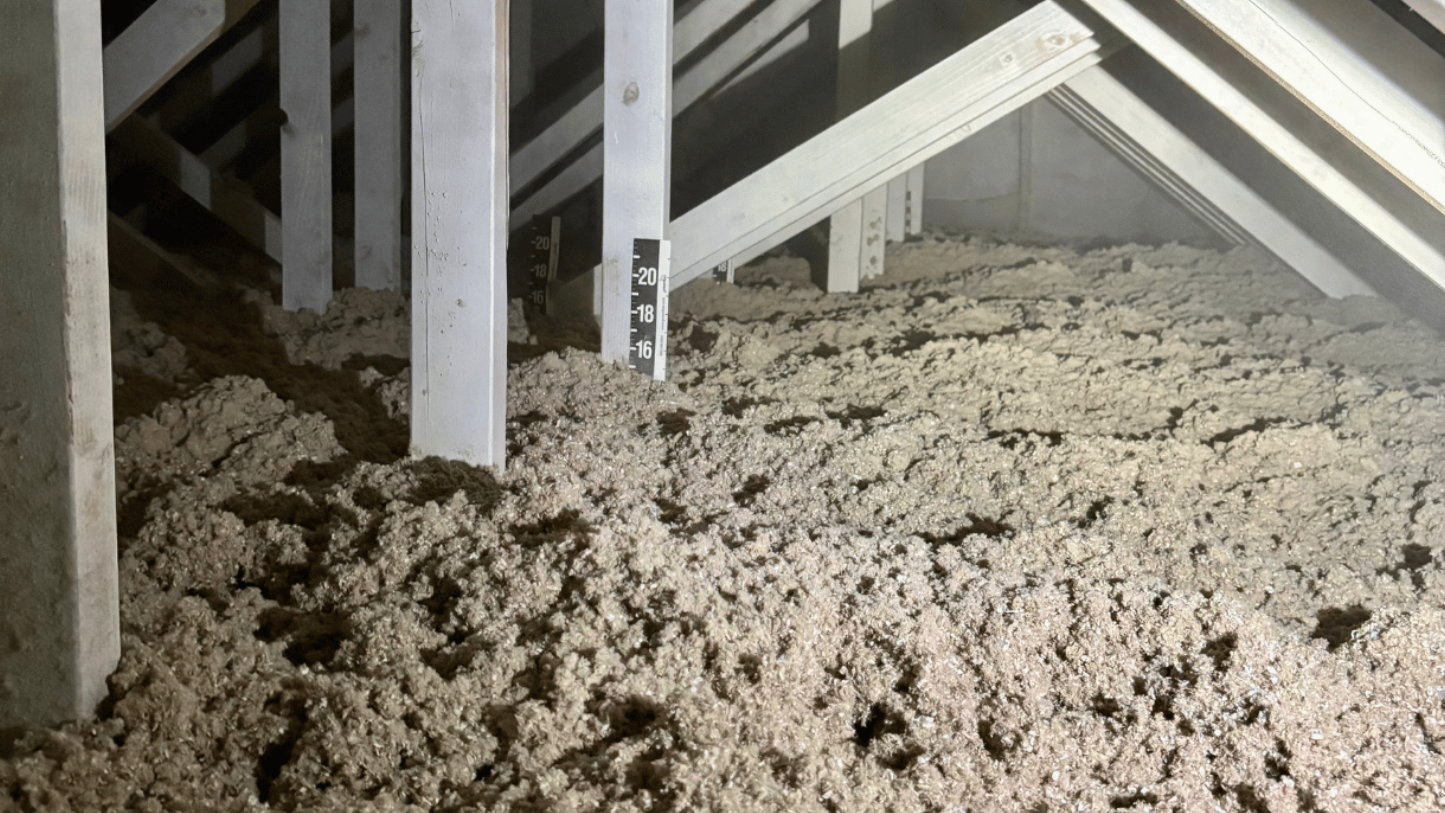
Loose pebbles, gray-brown or silver-gold, shiny flakes like mica
Vermiculite. Stop here.
Fluffy gray shredded paper
Cellulose
Pink, yellow, or white fluff or blankets
Fiberglass
Fluffy insulation on top, pebbles underneath
Vermiculite with a newer layer blown over it. Still vermiculite.
That last one catches people. Many attics were topped off years ago, so the vermiculite is hidden a few inches down. Homes built or insulated before 1990 are the ones to check.
If you see pebbles, close the hatch. Do not store boxes up there, and do not let anyone work in the attic until it is tested.
What to tell your furnace company
Tell them before they send a truck, not when the tech is standing under the hatch. Most HVAC companies would much rather know. Their techs are the ones breathing it.
Say this when you book:
"My attic has vermiculite insulation. It has not been tested yet. Does this job need anyone to go into the attic or cut into the ceiling?"
Then ask four things.
- Can the work be done without entering the attic? A furnace in a basement or closet often can be serviced with no attic access at all.
- What is your policy on vermiculite? A good company has one. Many will not enter the attic until it is tested or removed.
- Will anything be cut through the ceiling? New registers, fans, and vent runs all open a path from the attic into the house.
- Can the attic part of the job wait? If the furnace is safe to run, a short delay for testing costs you nothing.
A red flag is a tech who says "it's fine, I'll be quick" or offers to push it aside. An HVAC license is not an asbestos certification. In Washington, removing asbestos-containing material takes a certified abatement contractor.
If your furnace is out and it is cold, tell the company about the vermiculite anyway and ask for the fix that stays out of the attic. Then get the testing started the same day.
Get the free ZAI Trust test first
Vermiculite testing in Spokane can cost you nothing. The Zonolite Attic Insulation Trust tests samples for free to confirm whether your vermiculite is the Zonolite brand.
Do this before any removal, and before any HVAC work in the attic. The Trust requires proof that the product is Zonolite. Once the material is gone, so is your proof.
Here is how it works.
- Request a sampling kit from the Trust.
- Collect up to three small samples. Sampling disturbs the material, so it needs proper precautions. We collect and package samples for our customers.
- Label each sample with the date, the spot in the attic, the property address, your name, and who collected it.
- Mail them in with the chain-of-custody form. Regular mail is fine.
- Get your letter. The Trust tests at no charge and tells you whether it is Zonolite.
A free inspection from us comes first. We confirm it is vermiculite, tell you how much is there, and help you get the samples in.
After the test: removal and reimbursement
If the test confirms Zonolite, the Trust reimburses 55% of your eligible removal and re-insulation costs, up to its cap. You need two things: the product identification and proof of what you paid.
Removal is done under full containment with negative air, by a certified crew, with proper disposal. Then the attic is air sealed and re-insulated with Clean Fiber cellulose. Your furnace tech can work up there afterward without a second thought.
We write the estimate in the format the Trust wants, photograph the job before and after, and hand you a packet that is ready to submit. The full walkthrough is in how to claim the Zonolite Trust reimbursement. Here is how we handle vermiculite removal.
The right order saves money and keeps everyone safe: test, remove, re-insulate, then do the furnace work.
Frequently asked questions
Is it safe to run my furnace if I have vermiculite in the attic? Running the furnace does not disturb the insulation. The risk is people working in it, and leaky ducts in the attic pulling dust into the system. If your ducts run through the attic, mention that at your inspection.
Does all vermiculite contain asbestos? Not every bag did, but you cannot tell by looking. The EPA says to assume it does and not disturb it.
My HVAC tech already worked in the attic. What now? Keep the hatch closed, stay out of the attic, and get it tested. Tell us what work was done so we know where to look.
Can I take the sample myself? The Trust allows it, but sampling means disturbing the material. We would rather do it for you with the right precautions.
What if the test says it is not Zonolite? The Trust will not reimburse it, but it is still vermiculite and should still be handled as asbestos-containing. The removal process is the same.
Can new insulation just go over the top? No. Covering it leaves the hazard in place for every future tradesperson, and most utility rebate programs will not pay for insulation blown over vermiculite.
Find out before the furnace tech does
If your home was built before 1990 and you are not sure what is in the attic, a free inspection answers it in one visit. We will tell you what you have, start the free Trust testing, and give you a written plan.
Call or text (509) 879-0495 or schedule an inspection online.
Pacific Insulation & Mold Remediation. Veteran-owned, local, licensed and insured in Spokane and Coeur d'Alene since 2012. WA Lic. #PACIFIL886KH. ID Lic. #RCE-47538. 135+ five-star Google reviews.
Everything Attic. Except Bats. We're Terrified of Bats.
For More Information: Click Here
Follow us