Shop & Pole Barn Insulation: Stop Heating the Whole Palouse
Pole Barn Insulation Spokane County & Surrounding Areas
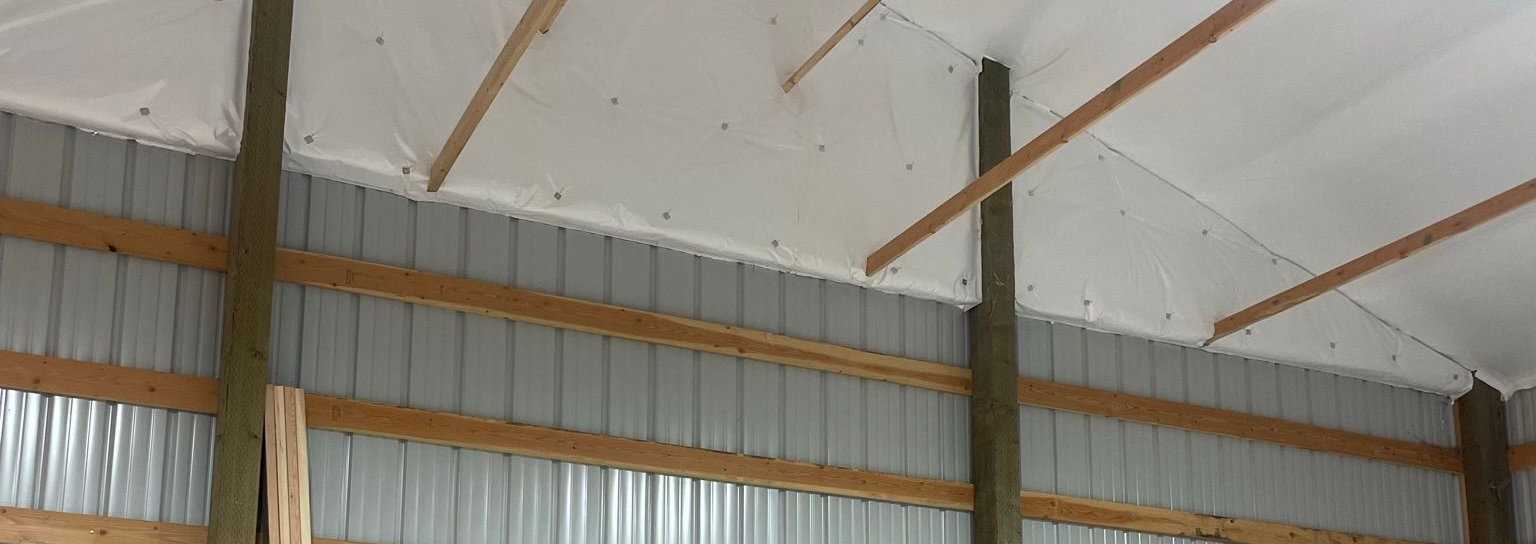
Harvest is wrapping up, deer season opens in a few weeks, and all across Deer Park, Chattaroy, Elk, Rockford, Tekoa, and Colfax the same ritual is starting: a guy walks into his shop on the first cold morning, fires up the heater, and spends the next three hours watching his breath while a 200,000 BTU torpedo heater screams at a building that cannot hold heat any better than a stock trailer.
By November he's got a second ritual: rags on the workbench to catch the drips, because the underside of the roof steel is raining.
Both problems are the same problem. Bare steel sheeting has an R-value of approximately nothing, so your heat leaves as fast as you make it, and the cold steel condenses every bit of moisture the heater, the concrete, and the snow-covered pickup put into the air. Here's what's actually going on, what it costs you, and the three ways to fix it before elk camp.
Why your shop rains: metal building condensation, explained
Condensation happens when warm, moist air touches a surface that's below its dew point. In an uninsulated pole barn in a Palouse winter, that's the entire ceiling and every wall. The moisture comes from everywhere: an unvented propane heater dumps about a gallon of water into the air for every gallon of fuel it burns, a slab poured without a vapor barrier wicks ground moisture year-round, and the snow packed in your truck's wheel wells melts onto the floor every evening.
All of it rises, hits 25-degree roof steel, and comes back down as rain. On your tools, your welder, your hay, your cast iron, your project truck's fresh primer. Given a season or two it's rusted fasteners, corroded purlins, moldy stored grain, and a shop that smells like a root cellar.
A dehumidifier fights the symptom. Insulation fixes the cause: put R-value between the air and the steel and the surface the air touches stays warm enough that the moisture stays in the air, where it belongs. Pair it with a vapor retarder on the warm side and sealed air leaks, and the indoor rain is done for good.
What a heated shop actually costs at 55°F
Let's use a common building: a 40x60 shop with 14-foot walls, about 2,400 square feet, kept at 55°F on a 25-degree day. These are illustrative numbers — your building, fuel price, and heater change them — but the ratio is the story.
Uninsulated, that building loses heat so fast that holding 55°F takes on the order of 150,000+ BTU per hour, continuously. On propane, that's roughly a gallon and a half to two gallons an hour — call it $4 to $5 an hour at recent prices, $40+ for a working day, and several hundred dollars a month if you keep it warm around the clock. Which is why nobody does: the uninsulated shop gets heated in panic bursts, never actually gets warm in the corners, and goes back to freezing overnight. You're not heating the shop; you're heating the Palouse, briefly.
Insulated — R-49 to R-60 above a ceiling, R-19+ walls, air leaks sealed — that same building's load drops by 80 to 90 percent. Now a modest 30–60k BTU heater holds 55°F sipping fuel, the building coasts overnight instead of resetting to outdoor temperature, and warming it to working temperature takes twenty minutes instead of three hours. Most shop owners find the insulation pays for itself in a small number of heating seasons, and the shop actually gets used all winter, which is the point.
And 55°F is the right target: warm enough for hands, glue, paint, and batteries; cool enough to be cheap. The insulation is what makes 55°F a set-it-and-leave-it number instead of a fantasy.
The three ways to insulate it
1. Blow-in above a ceiling liner (the workhorse)
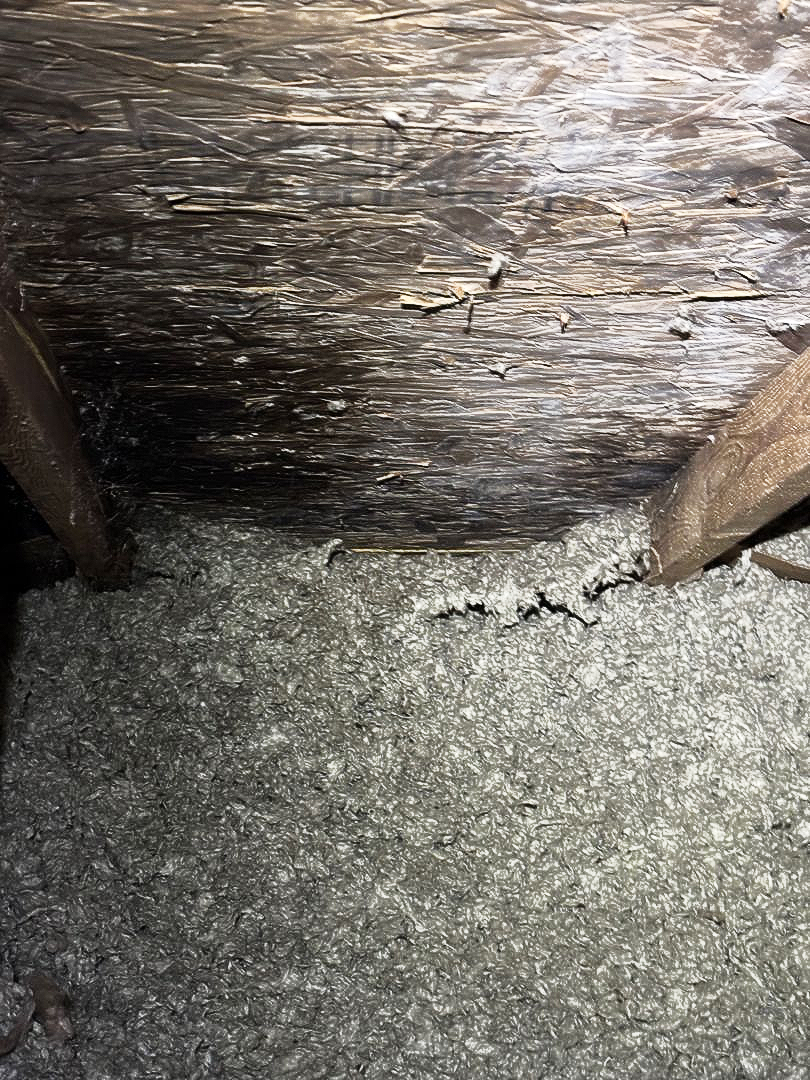
If your shop has, or can have, a flat ceiling — steel liner panels or OSB across the bottom chord of the trusses — this is the best cost-per-R in the business. We air-seal the penetrations, then blow Clean Fiber cellulose above the liner to R-49 or R-60: recycled, borate-treated, resistant to mold, rodents, and fire. The ceiling is where most of your heat leaves, so this single move does the heavy lifting, and it's the same material and blower we use on residential attics. Bonus: a white liner ceiling roughly doubles your shop lighting.
This is the assembly we install most, and for buildings in Deer Park, Chattaroy, and Elk with trusses on standard spacing, it's usually a quick job: liner, seal, blow, done.
2. Batts in the walls (the finisher)
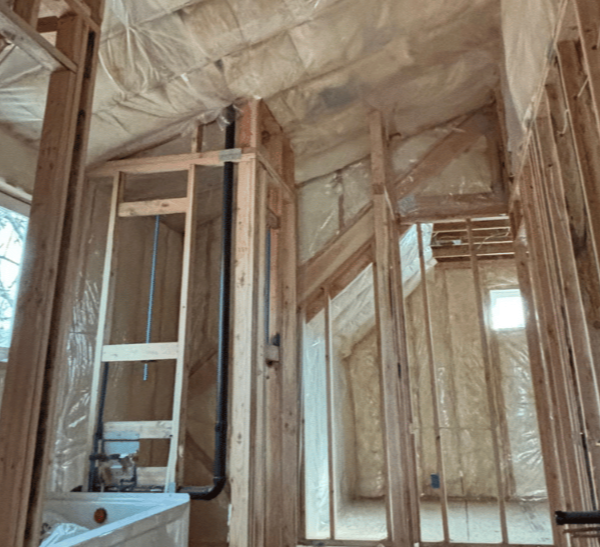
With girts or framed walls, batts fill the cavities affordably and predictably: fiberglass for the budget, mineral wool where you want fire resistance and sound deadening around the compressor corner. The non-negotiable detail is the vapor retarder on the warm side and steel that isn't left in contact with moist air — batts stuffed against bare sheeting with no vapor strategy are how you get wet walls that grow problems behind the liner. Done right, insulated walls also quiet the building both directions, which your household and your neighbors appreciate at 6 a.m. on a Saturday.
3. Rigid foam board (the problem-solver)
Rigid board earns its cost where continuous coverage matters: run across girts and framing, it breaks the thermal bridge at every steel member (steel conducts heat about 300 times faster than wood — those frost stripes on your ceiling are the framing telling on itself), and foil-faced board with taped seams doubles as the vapor retarder. It's also the answer for overhead door panels, stem walls, and buildings where cavity depth is tight. For open-to-the-roof buildings with no flat ceiling, a hybrid approach — condensation control at the steel plus board or batts making up the R — gets you there; we'll spec it after we see the building.
The order that pays back fastest
Budget says pick one thing this fall? Ceiling first — it's most of the heat loss and all of the rain. Walls second. Doors and air sealing third. We bid it by assembly with line items, exactly so you can phase it, and financing is available if you'd rather do it all before the snow flies.
Get it done before elk camp
October is the last comfortable month to do this work, and it's when our shop schedule fills. If you're in Deer Park, Chattaroy, Elk, Nine Mile Falls, Rockford, Fairfield, Spangle, Tekoa, Colfax, or anywhere on the Palouse — yes, we drive out, and we like the drive.
Get a shop or pole barn insulation bid: insulationspokane.com or (509) 879-0495.
Everything Attic. Except Bats. We're Terrified of Bats.
(A shop ceiling counts as an attic. Bats in the shop still don't count. We checked with management.)
Follow us