Ice Dam Season Prep — The R-60 + Air-Seal Package, Explained
Fix Ice Dams Permanently: What It Costs, How Long It Takes, and the Energy Math
You know why the icicles form. Here's what fixing it costs and takes.
Two weeks ago we explained why icicles mean your attic is leaking heat: warm air escapes into the attic, melts the snow from underneath, and the meltwater refreezes at the cold eave. That post told you what is happening. This one tells you what it costs to stop it for good, how long the crew is in your house, what the attic looks like before and after, and how fast the job pays itself back.
The short version: a permanent ice dam fix is a one-day job. Most Spokane homes land in the low-to-mid four figures, the Avista rebate can cover a meaningful chunk when the existing insulation is thin, and the energy savings alone return the cost in well under a decade before you count a single avoided roof or drywall repair.
If you want it done before the first real snow, the window is now. More on that at the end.
What "permanent" actually means
Ice dams have exactly one cause: the roof deck is warmer than the eave. Anything that does not fix that is maintenance, not a repair. A permanent fix has three parts, and they only work together.
- Air sealing. Before any insulation goes in, we seal the paths warm house air takes into the attic: can lights, bath fan housings, the attic hatch, plumbing and wiring penetrations, the gaps along top plates, and the chase around the chimney or flue. This is the step most insulation jobs skip, and it is the reason a house can have R-49 and still grow icicles.
- Insulation to R-60. Spokane's climate zone calls for R-49 minimum; we blow Clean Fiber cellulose to R-60, which is about 17 inches. Cellulose settles into gaps and resists air movement better than loose fiberglass, so it keeps the heat in the house instead of letting it drift up to the sheathing.
- Ventilation. Soffit baffles keep the new insulation from blocking the intake vents, and we confirm the ridge or roof vents can actually move air. A ventilated attic stays close to outdoor temperature, so whatever heat does sneak through gets carried off before it reaches the snow.
Why heat cables don't count. Heat cables melt channels through the dam so water can drain. They do nothing about the warm roof that built the dam, they cost money to run every cold night, and they fail at the one spot you can't see. We have never once been called to a house with heat cables that did not still have an ice dam problem.
What it costs in Spokane
We do not quote over the phone, because the price depends on what the attic looks like, not on the square footage alone. That said, after fourteen years of these jobs we can tell you where most homes land. These are typical ranges for a Spokane or Coeur d'Alene single-story home; your written quote after inspection will be a single number, not a range.
Attic
Scope
Typical range
1,000 to 1,400 sq ft
Air sealing + top up existing insulation to R-60 + baffles
$3,000 to $4,500
1,400 to 2,000 sq ft
Air sealing + top up to R-60 + baffles
$4,000 to $6,000
Any size
Add full removal first (old insulation is contaminated, wet, or compressed)
Add $1.50 to $3.00 per sq ft
Any size
Add a new insulated, weatherstripped attic hatch
$250 to $450
Three things move the number inside those ranges:
- How many penetrations there are. A 1970s rancher with four can lights seals fast. A 2000s home with thirty can lights, three bath fans, and a whole-house fan does not.
- What is up there now. Clean, dry, settled fiberglass gets topped over. Rodent-contaminated or smoke-damaged insulation comes out first, which is a separate removal job.
- Access. A scuttle hatch in a closet versus a pull-down stair in the garage changes how long the hose run takes and how much protection the house needs.
If you have had a contractor quote a low number and then watch it grow on the day, we wrote about why that happens. Our price is set after the inspection and does not change.
The one-day timeline
One crew, one truck, one day. You can be home or not. Here is how a typical top-up job runs; a job with removal first adds the morning of the day before.
- 7:00 AM. Arrive and protect. Drop cloths from the door to the attic access, plastic on the hatch opening, hose run staged. We walk you through the plan if you are home.
- 7:30 AM. Air seal. Two people in the attic with foam, caulk, and fire-rated covers for the can lights. Every penetration gets found with a light from below and sealed from above. This is the longest step: two to three hours on most homes.
- 10:30 AM. Baffles and dams. Soffit baffles stapled at every rafter bay so the intake vents stay open, and dams built around the hatch, the furnace flue, and any attic-mounted equipment.
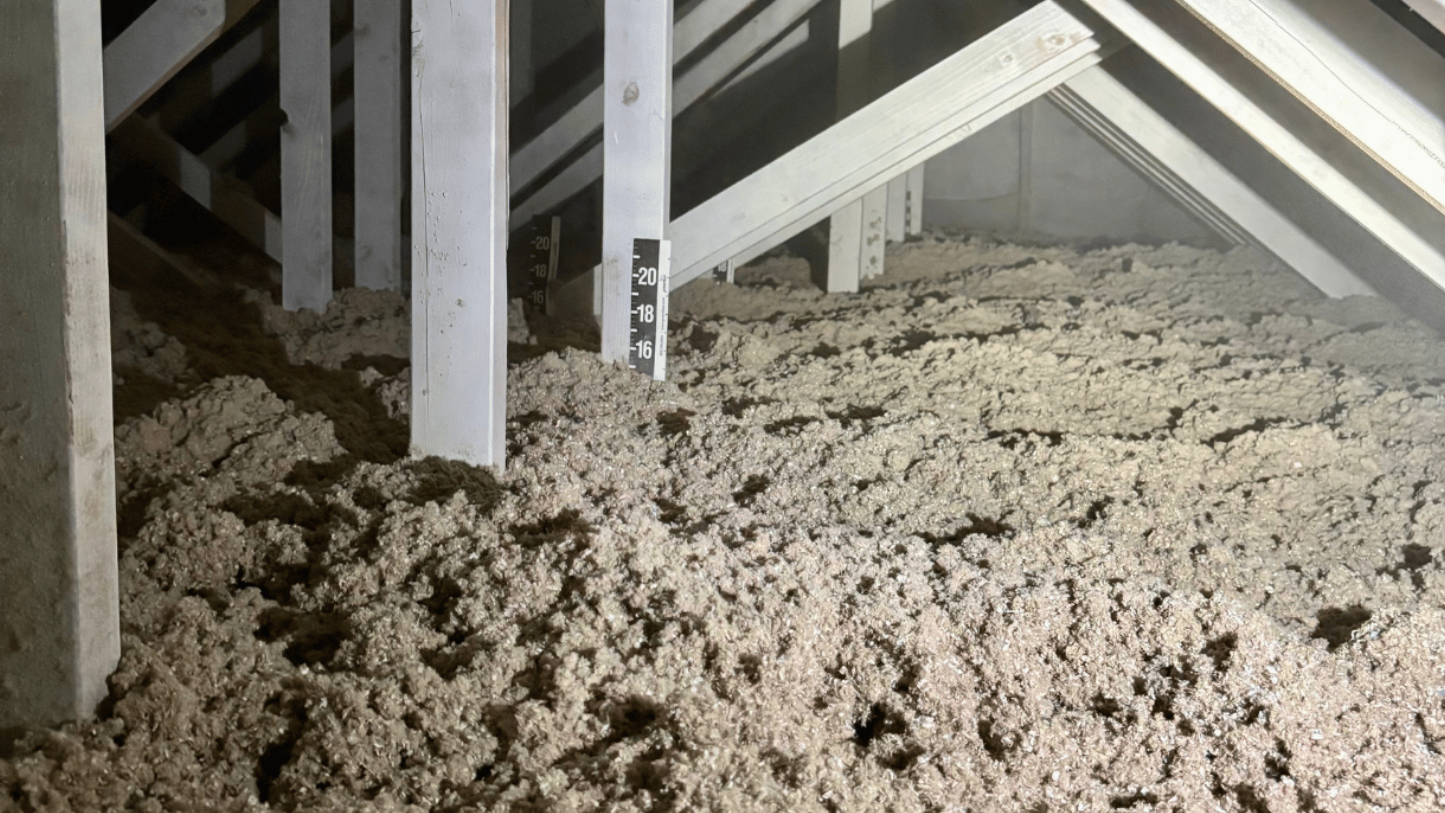
- 11:30 AM. Blow Clean Fiber to R-60. The machine runs from the truck, the hose comes in through the access, and one person in the attic lays the cellulose level while another feeds the machine. Depth markers go in every 10 feet so you can see R-60 for yourself.
- 1:30 PM. Hatch and cleanup. Insulated, weatherstripped hatch cover installed. Hose out, plastic down, floors vacuumed, drop cloths rolled.
- 2:00 PM. Walkthrough. We show you the attic from the hatch, hand you the depth photos and the R-value in writing, and leave the Avista rebate paperwork filled in with your job details.
Most homes are done before school pickup. Nobody has to move out, nothing in the house gets touched except the hallway to the attic, and the first heating bill after the job shows the difference.
Before and after: last winter's ice dam jobs
[Photo slots. Drop in last winter's shots and use the captions below. Save the files to the content library as the slug names in brackets so they can be reused in posts.]
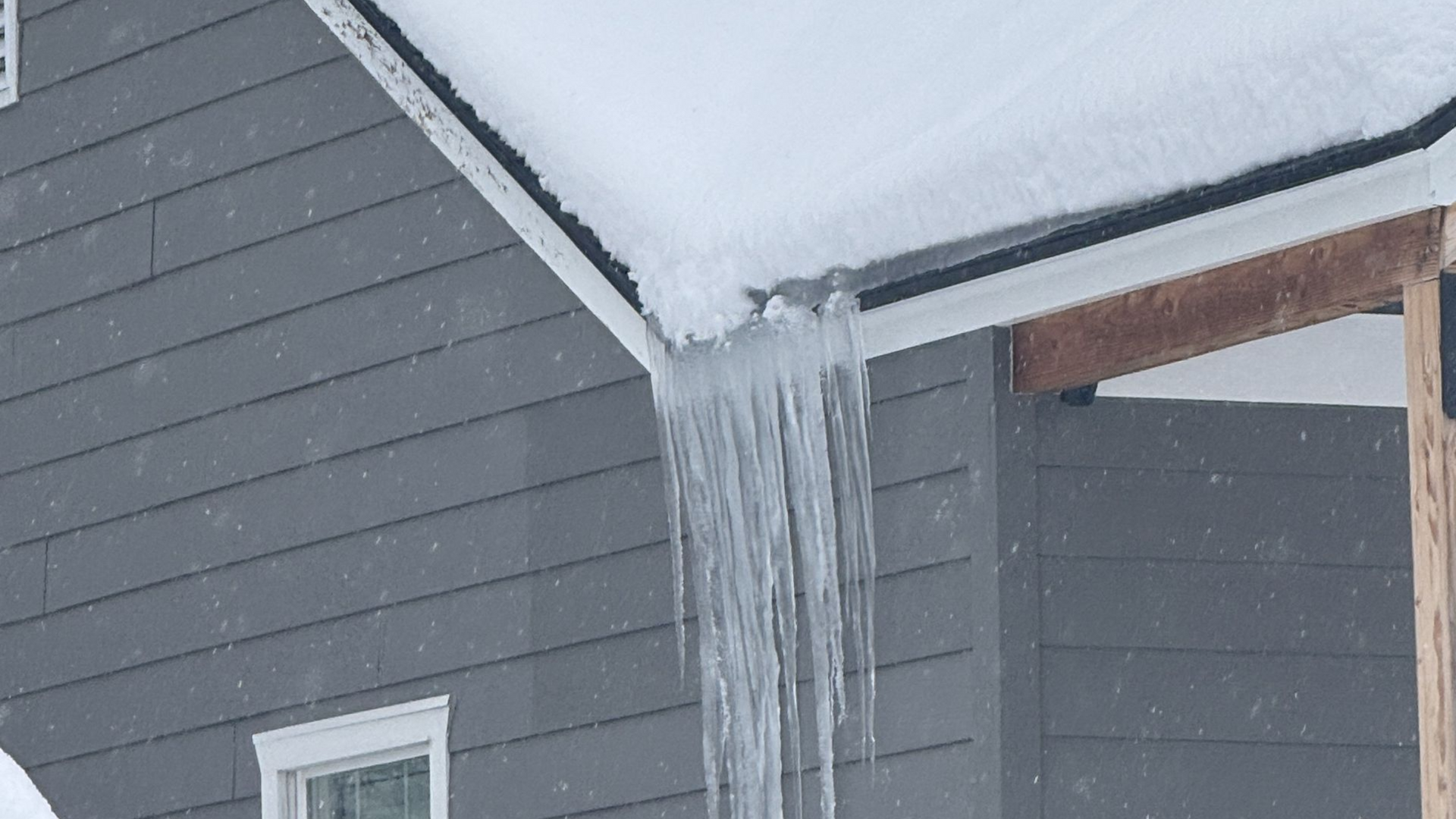
Before: the eave. [ice-dam-icicles-eave-spokane.jpg] Icicles two feet long and an ice shelf a foot thick over the gutter on a north-facing Spokane rancher. The homeowner had already replaced ceiling drywall in the bedroom below the year before.
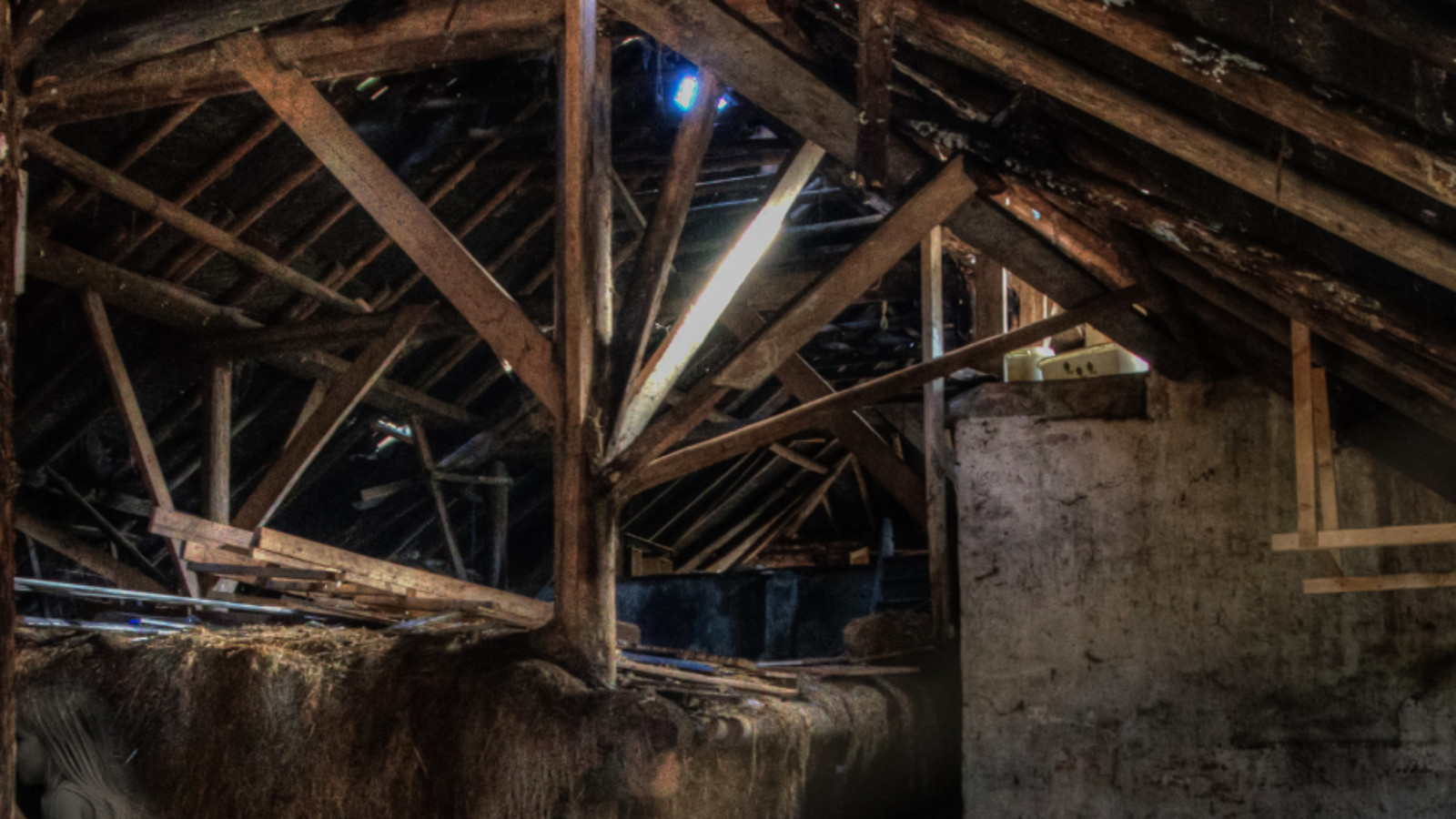
Before: the attic. [ice-dam-attic-before-thin-insulation-spokane.jpg] The same house from the hatch. Original fiberglass batts settled to about 5 inches, roughly R-15, with the joists showing and daylight visible at the soffits where the batts had been pushed into the vents. Dark stains on the sheathing above the bathroom mark where the fan exhausted into the attic for twenty years.
During: air sealing. [attic-air-sealing-can-lights-spokane.jpg] Fire-rated covers over the can lights and foam at every top plate before a single pound of cellulose goes in. This is the step you cannot see once the job is done, which is why we photograph it for you.
After: the attic. [attic-insulation-r60-after-spokane.jpg] Clean Fiber cellulose blown level to 17 inches, depth marker reading R-60, soffit baffles visible at every rafter bay, and a built-up dam around the hatch.
After: the eave, following storm. [ice-dam-fixed-clean-eave-spokane.jpg] The same eave after the next snowfall. Snow sitting flat on the roof, no melt line, no icicles, the neighbor's house in the background still growing them.
The energy bill. [avista-bill-before-after-attic-insulation.jpg] Optional if the homeowner shared it: January gas bill before and the January after, same weather, same thermostat setting.
The energy math, honestly
Most insulation ads promise "up to 40 percent savings" without showing their work. Here is the actual arithmetic for a typical Spokane job, so you can plug in your own numbers.
The house: 1,500 sq ft attic, existing insulation around R-19, upgraded to R-60. Spokane averages roughly 6,500 heating degree days a year.
Insulation alone. Heat loss through a ceiling is proportional to 1/R. Going from R-19 to R-60 cuts the ceiling's heat loss by about 68 percent. On 1,500 sq ft over a Spokane winter that is roughly 8.4 million BTU a year that no longer leaves through the attic.
- Gas furnace at 90 percent efficiency: about 94 therms saved. At Avista's current Washington residential rate of roughly $1.50 per therm, that is about $140 a year.
- Electric baseboard or furnace: about 2,470 kWh saved. At roughly $0.12 per kWh, that is about $295 a year.
- Heat pump: about a third of the electric figure, $100 to $130 a year.
Air sealing on top. This is where the bigger number hides. Air leakage through the ceiling is typically the largest single heat loss in an older Spokane home, and sealing it usually trims total heating use by 10 to 20 percent. On a $1,500 annual gas heating bill that is $150 to $300 a year on top of the insulation savings.
Combined: roughly $290 to $440 a year for a gas home, $450 to $600 for electric resistance heat. On a $4,500 job, that is a 10- to 15-year payback for gas and 7 to 10 years for electric, before the rebate.
What the math leaves out. Every number above is energy only. It does not count the ceiling drywall, the gutter, the fascia, the insulation ruined by meltwater, or the roof deck rot that a single bad ice dam winter produces. One of those repairs typically runs $1,000 to $5,000, and homes that grow ice dams grow them every winter. Count one avoided repair and the job pays for itself the first year.
Book before the November rush
Every year the same thing happens. The first week it stays below freezing, the first icicles show up, and the phone does not stop. From mid-November through January we are scheduling two to three weeks out, and a lot of those jobs are emergency removals of insulation that meltwater already ruined.
October is the opposite. Attics are cool enough to work in all day, the schedule is open, and the fix is in place before the snow it is meant to stop. If you saw icicles last winter, the attic has not changed since. It will do the same thing this year unless something changes before the snow.
Book your attic inspection at insulationspokane.com/inspections or call (509) 879-0495. You get a written report with photos, a single fixed price, and a date on the calendar before November.
Selling the house this winter? Buyers' inspectors photograph icicles. The Home Sale Hotline is (509) 351-2811.
Pacific Insulation & Mold Remediation has served Spokane and Coeur d'Alene since 2012 with over 135 five-star Google reviews. Licensed and insured: WA Lic. #PACIFIL886KH, ID Lic. #RCE-47538. Make sure your contractor is local, licensed and insured at LNI.WA.GOV.
Everything Attic. Except Bats. We're Terrified of Bats.
Follow us