Smoke Check, Two Months Later — Is the Smell Gone, or Just Cold
You weren't imagining it: the smoke smell faded, and now it's back
If your house smelled like a campfire in August, got better in October, and now smells like smoke again on warm afternoons, nothing in your home healed itself. The smoke never left. It is sitting in the attic insulation, and the temperature up there decides how much of it you notice.
We hear this every year after a bad smoke season in Spokane and Coeur d'Alene. Homeowners air the place out, run the furnace filter hard for a month, the smell drops, and they close the file. Then the first warm stretch of spring hits and the whole house smells like the week of the fire again.
This post explains why that happens, what inspectors actually find in attics months after the smoke, and why your insurance clock may still be running even though the smell went quiet.
Why the smoke smell fades in winter: cool attics off-gas less
Smoke odor is chemistry, not dust. Wildfire smoke leaves behind soot, ash, and a film of volatile organic compounds (VOCs) that stick to porous surfaces. Blown-in attic insulation is one giant porous surface, and it soaks up more of that film than every wall and ceiling in the house combined.
Those compounds release back into the air as gas, a process called off-gassing. The rate depends heavily on temperature. A warm attic drives the compounds out of the insulation fast. A cold attic slows that release to a trickle.
A Spokane attic in January sits close to the outdoor temperature, often below freezing. The insulation is cold, the off-gassing nearly stops, and the house smells normal. That is not a clean attic. It is a paused one.
Two other winter habits hide the problem:
- Windows stay shut, so you stop comparing indoor air to fresh outdoor air.
- Your nose adapts. After a few weeks at a low level, most people stop registering the smell until it spikes.
Why it comes back in spring (and on every warm furnace day)
The first sunny week of April, an attic can jump from 40°F to over 100°F by mid-afternoon. All the compounds that sat dormant in the insulation for five months start releasing at once. That is the spike people describe as "the smell came back overnight."
It does not need to wait for spring, either. You can get a smaller version of it in winter:
- A warm chinook day in January or February heats the roof deck and the top layer of insulation.
- The furnace runs hard, the ceiling drywall warms, and the insulation touching it warms with it.
- Recessed lights, bath fans, and the attic hatch leak warm house air into the insulation around them. Those spots off-gas all winter, which is why the smell is often strongest in one hallway or one bedroom.
Each spring the spike is a little weaker than the last, which convinces people it is "working its way out." In our experience it takes several years to fade on its own, and the soot and ash never leave at all. If you are selling the house in that window, the buyer's inspector will find it on day one.
What inspectors still find months later: ash on top of the insulation
Odor is the part you notice. Ash is the part that does not go anywhere.
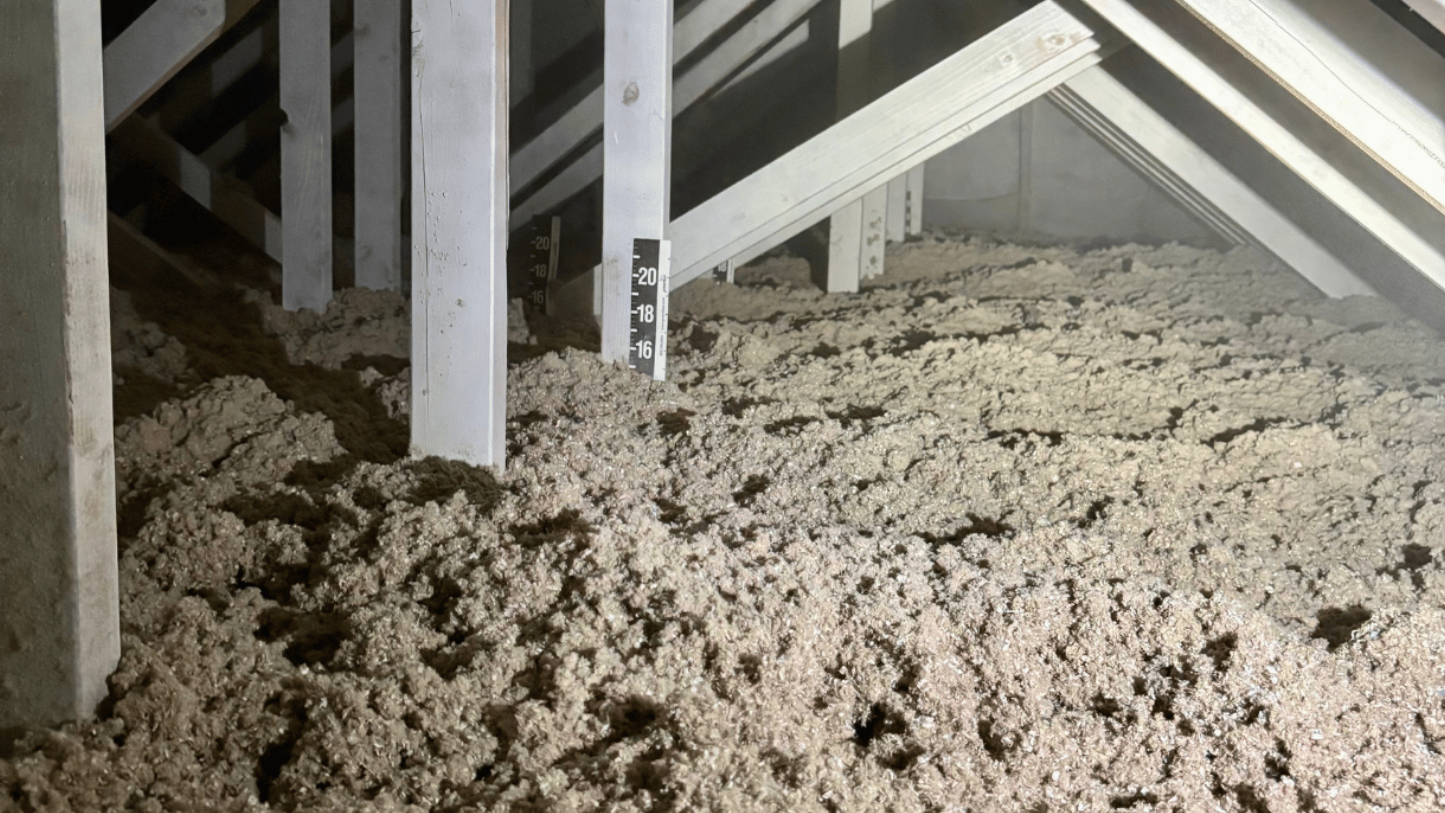
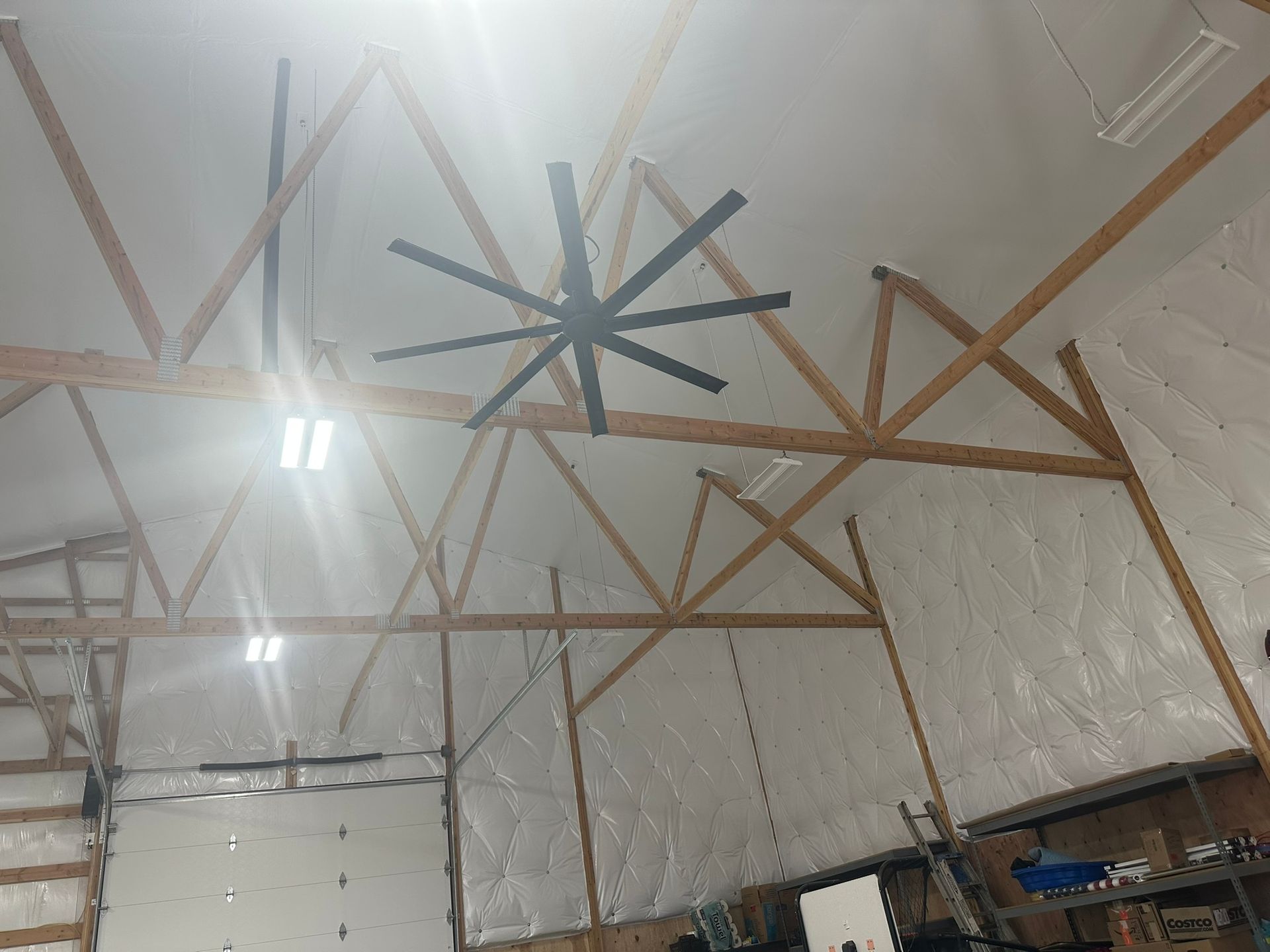
When we open an attic six months to a year after heavy smoke, the insulation almost always looks the same as it did the week of the fire:
- A gray or black layer of fine ash sitting on top of the blown-in insulation, heaviest under roof vents and soffits where the smoke came in.
- Soot streaks on the underside of the roof sheathing and on the rafters.
- Darkened insulation around bath fans, can lights, and the attic hatch, where house air pulls the particles down into the material.
- A sharp, acrid smell the moment the hatch opens, even on a cold day.
A white glove wiped across the top of the insulation comes back gray. A home inspector doing a pre-sale walkthrough will photograph exactly that, and a buyer's agent will ask for remediation or a credit.
Filtering the house air does nothing about this. The furnace filter only touches air that passes through the ducts. The attic is outside the conditioned space, so the ash stays put until someone physically removes the insulation it is sitting on.
The fix that actually works: remove, treat, air-seal, re-insulate
You cannot deodorize insulation. Sprays and ozone treat the surface and leave everything underneath loaded. The only fix that holds up through the next spring is to take the contaminated material out and start over. Our process is the same one we described in Why Your Attic Still Smells Like Smoke:
- Vacuum out the old insulation with high-CFM industrial vacuums, hosed out to a truck-mounted bag so the ash never travels through the house.
- Treat the attic with Vital Oxide on the rafters, sheathing, and ceiling joists where soot film remains.
- Air-seal the can lights, bath fans, top plates, and attic hatch so house air stops pulling attic contaminants down into living space.
- Re-blow Clean Fiber cellulose to R-49 or R-60, which also fixes the heat loss that made the attic warm enough to off-gas in the first place.
Most homes are one day. You get a clean attic, a smell that is gone rather than paused, and an energy upgrade the next heating bill will show.
Re-run your insurance deadlines before the smell comes back
The quiet winter is exactly when smoke claims expire. Smoke and ash damage is covered like any other fire damage under a standard homeowners policy, but every policy runs on clocks that started the day of the loss, not the day the smell returned. Pull your policy and your claim correspondence and check these five dates now.
Deadline
What it is
Where to find it
Proof of loss
The signed, itemized statement of damage your insurer requires. Many policies set it at 60 days from the request, and insurers will often extend it in writing if you ask before it passes.
Policy "Duties After Loss" section; the adjuster's first letter
Recoverable depreciation (the holdback)
The gap between the actual cash value check you received and full replacement cost. You get it only after repairs are completed and invoices submitted, and policies cap how long you have, often 180 days to one year from the ACV payment or date of loss.
Settlement letter or estimate; look for "RCV," "ACV," and "recoverable depreciation"
Supplemental claim
A request to add damage found after the first estimate, such as attic insulation the adjuster never looked at. Allowed while the claim is open, and sometimes after, within the policy's reopening window.
Ask the adjuster in writing; keep the claim number
Additional living expenses
Coverage for staying elsewhere during repairs. Many policies cap it at 12 months from the loss.
Policy "Loss of Use" or "Coverage D"
Suit limitation
The last day you can take the insurer to court over the claim. Policies set it at one or two years from the date of loss.
Policy "Conditions" section
Three things we see go wrong on smoke claims specifically:
- The adjuster inspected living space in late summer, wrote the estimate for cleaning and painting, and never entered the attic. Attic insulation removal is a separate line item and must be added before the holdback window closes.
- The homeowner waits for spring to "see if it comes back" before scheduling work. By then the recoverable depreciation deadline has passed and the replacement-cost portion is forfeited.
- Nobody documents the attic. Take photos of the ash on top of the insulation now, date-stamped, and send them to the adjuster with a written request to add the attic to the scope.
If you had a claim after this summer's fires, call your adjuster this week and ask three questions: Is my claim still open? What is my recoverable depreciation deadline? Will you add attic insulation removal to the scope based on an inspection report? We provide a written attic report with photos you can forward directly. The Washington Office of the Insurance Commissioner can answer policy questions and takes complaints if a claim stalls.
Deadlines vary by carrier and policy form, so treat the ranges above as a prompt to read your own documents, not as a substitute for them.
What to do this week
- Open the attic hatch on a cold morning and smell. If it hits you, the insulation is holding smoke.
- Wipe the top of the insulation with a white rag or glove and photograph the result.
- Find your claim number and read the settlement letter for the recoverable depreciation deadline.
- Book an attic inspection. We put the findings and photos in a written report you can send straight to your adjuster.
Don't wait for April to prove the smell is still there. The attic already knows.
Schedule a same-day attic inspection at insulationspokane.com/inspections or call (509) 879-0495. Selling the house? The Home Sale Hotline is (509) 351-2811.
Pacific Insulation & Mold Remediation has served Spokane and Coeur d'Alene since 2012 with over 135 five-star Google reviews. Licensed and insured: WA Lic. #PACIFIL886KH, ID Lic. #RCE-47538. Make sure your contractor is local, licensed and insured at LNI.WA.GOV.
Everything Attic. Except Bats. We're Terrified of Bats.
Follow us