Mouse Droppings in Attic Insulation: Your Questions Answered
Do I need to replace insulation after mice?
November is when the phone starts ringing about mice. The first hard frost pushes them indoors, the furnace comes on, the windows close, and suddenly the house is quiet enough at night to hear them. Here are the questions we get most, answered the way we'd answer them in your kitchen.
Do I need to replace insulation after mice?
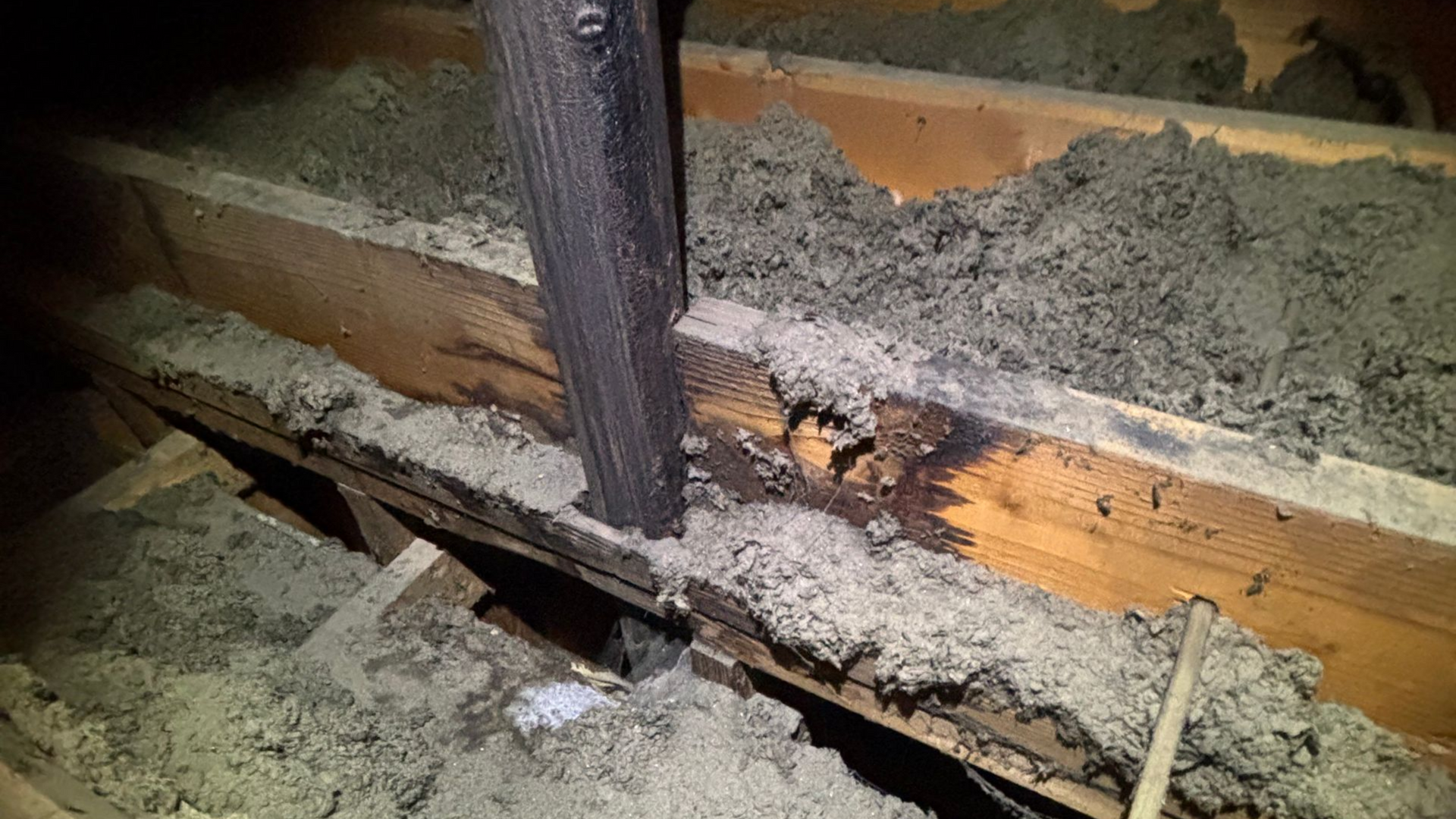
If there are droppings across the surface, urine staining, tunnels, or a nest, yes. A single dropping near the hatch is not a replacement job. Insulation that mice have lived in is.
The reason isn't squeamishness. Mice urinate constantly as they move, and the insulation absorbs it. That urine is a scent trail that tells every mouse within range that this attic is safe, warm, and already claimed. Leave the insulation and you will have mice again, no matter how many traps you set.
Can I just clean the droppings instead of replacing the insulation?
You can vacuum visible droppings off the top. What you can't do is clean the inside of ten inches of blown-in fiber. The droppings on the surface are the part you can see; the urine is distributed through the whole depth. Surface treatment removes the evidence and leaves the problem.
We've answered this more fully in the insulation removal Q&A, but the short version is: if it's contaminated enough that you're asking, it's contaminated enough to come out.
Why does my house smell like mice when the heat kicks on?
Because your furnace is pulling attic air into the house. Return-air leaks, duct joints in the attic, and the gaps around can lights all let attic air migrate downward when the blower runs. The warm air also makes the ammonia in dried urine volatile again. That's why the smell was faint in September and obvious in November: nothing changed in the attic, you just turned on the furnace.
The same mechanism carries mold spores and smoke particulate. If the smell is musty rather than sharp, read the attic mold article too.
Is it dangerous to have mouse droppings in the attic?
It can be. Deer mice, which are common in the Inland Northwest, carry hantavirus, and the virus is transmitted when dried droppings and urine are disturbed and the dust is inhaled. The CDC's guidance is specific: don't sweep or dry-vacuum rodent waste, wet it down with disinfectant first, and ventilate. An attic is the one place in the house with no ventilation and a lot of disturbed dust. This is the main reason we don't recommend homeowners do this cleanup themselves.
What are the sounds I'm hearing at night?
Scratching or light scurrying in the ceiling after dark, especially above bedrooms and near exterior walls, is almost always mice. Heavier thumping is usually a squirrel or raccoon and means a bigger hole. Either way, the sound is the mouse moving through your insulation, not across it, because tunneling in loose fill is how they stay warm.
Should I seal the entry points before or after cleanup?
Before, or on the same day. Cleaning and re-insulating an attic with the door still open is a waste of money. Mice fit through a gap the width of a pencil, so the usual entries are around utility penetrations, under siding corners, at soffit gaps, and where the roof meets a wall. We seal with steel mesh and sealant as part of the removal day, and we'll point out anything exterior that needs a pest control company.
Does the attic need to be disinfected?
Yes. After the contaminated insulation is vacuumed out, the framing and the top of the drywall are treated with an antimicrobial. This neutralizes the scent trail, kills bacteria, and handles any mold that was growing under the nest. It's also the moment we air seal the ceiling plane, because it's the only time anyone can see it.
What insulation should go back in so it doesn't happen again?
No insulation is mouse-proof, and anyone who tells you otherwise is selling something. But dense-pack cellulose is a worse place to tunnel than loose fiberglass, and it's treated with borate, which rodents and insects avoid. Combined with sealed entry points, it changes the attic from the best spot on the block to a poor one. We re-insulate with Clean Fiber cellulose to R-60.
How much does rodent attic cleanup cost?
It's an insulation removal job plus treatment and sealing, so it's priced the same way: by attic size, insulation depth, and access, with the contamination work as its own line. We inspect first and quote in writing. The removal cost guide explains the pricing logic, and this article walks through what the droppings themselves tell us.
Not sure what you have?
Take a photo from the hatch and text it to the Home Sale Hotline at (509) 351-2811, or book a same-day attic inspection at insulationspokane.com/inspections. We'll tell you whether it's a trap problem or a removal problem.
Everything Attic. Except Bats. We're Terrified of Bats.
More Information: Click Here
Follow us