Heating Bills Start Now — What R-Value Your Spokane Attic Actually Needs
R-19 vs R-49 vs R-60: What Attic Insulation Is Actually Worth in Spokane
Two questions, and only one of them matters
"What R-value do I need in Spokane?" is the question we get on almost every inspection. The answer is short: the Washington energy code says R-60 for a new attic, and R-49 is the floor for anything that counts as an upgrade. Most homes built before 2000 are sitting somewhere between R-11 and R-30.
The better question is "what is each of those numbers worth to me in dollars?" because that is what decides whether you top off what you have, go all the way to R-60, or pull the old insulation out and start over. This post answers that one with the actual arithmetic, in Spokane energy prices, for a typical house. Then it covers the part most insulation companies skip: the four situations where adding new insulation on top of old is the wrong move no matter what the R-value math says.
What R-value actually means (and how to read your own attic)
R-value is resistance to heat flow. Double the R, halve the heat that gets through. That one fact is why the first inches of insulation matter enormously and the last inches matter less, which is the whole story of this post.
You can estimate your own attic in two minutes with a flashlight and a tape measure from the hatch:
- Fiberglass batts (pink or yellow blankets): about R-3.2 per inch. A 6-inch batt that has not settled is R-19. A 3.5-inch batt is R-11.
- Loose fiberglass (fluffy white or pink): about R-2.5 per inch.
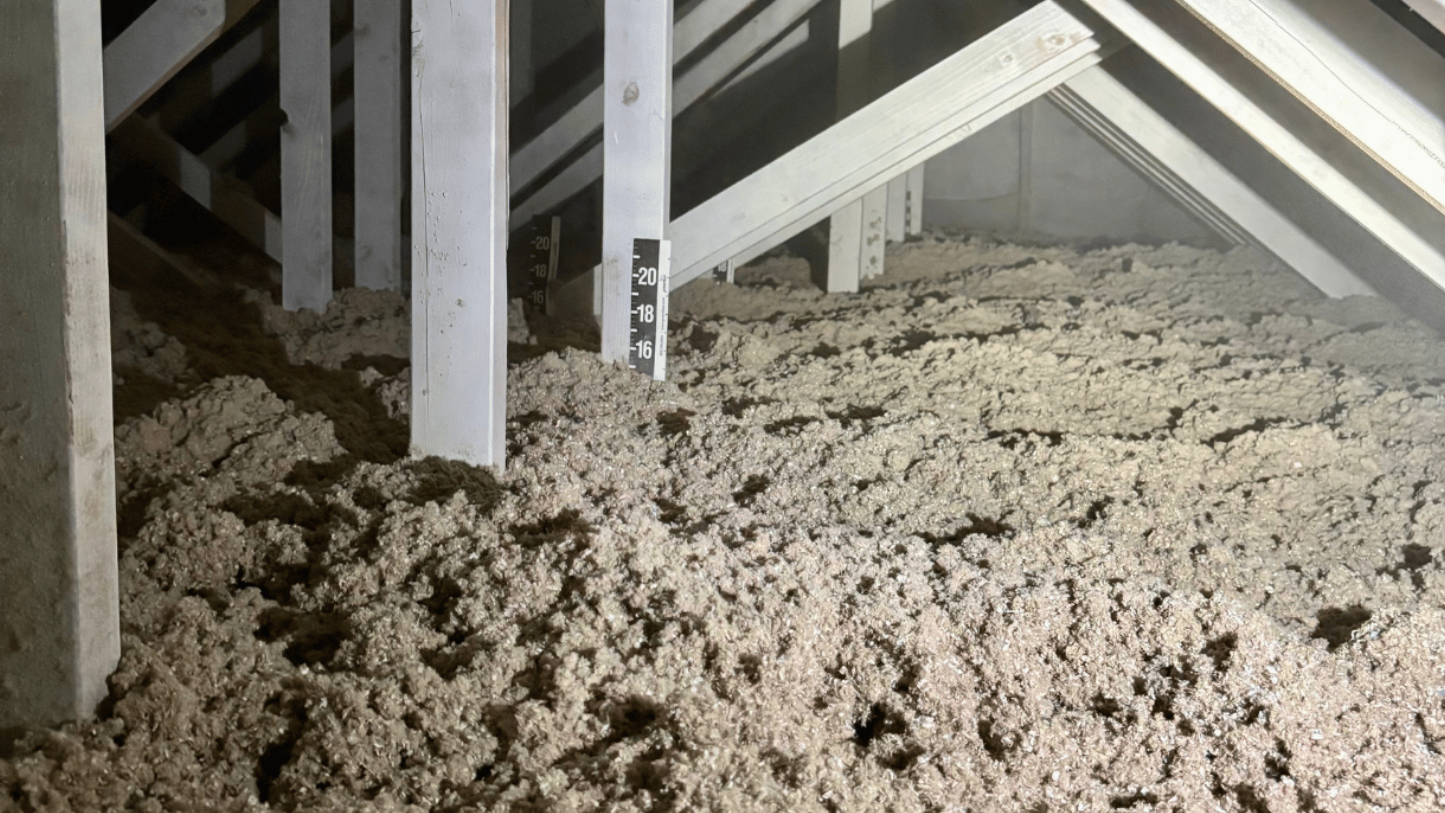
- Blown cellulose (gray, looks like shredded newspaper): about R-3.5 per inch, so R-60 is around 17 inches.
- Rock wool (gray-brown, dense): about R-3 per inch.
- Vermiculite (gray-gold pebbles): about R-2 per inch, and stop reading and skip to the removal section below.
Measure where the insulation is deepest and where it is thinnest. In most Spokane attics built before 2000 we find 4 to 7 inches of settled fiberglass, which puts the real R-value between R-11 and R-19, often with the joists sticking up through it. Exposed joists are a sign on their own: wood is about R-1 per inch, so every joist is a strip of R-9 running across your R-19 ceiling.
R-19 vs R-49 vs R-60 in dollars
Here is the heat that leaves through the ceiling of a 1,500 sq ft attic over a Spokane heating season (about 6,500 heating degree days), and what it costs to replace it. Gas assumes a 90 percent furnace at roughly $1.50 per therm; electric assumes baseboard or an electric furnace at roughly $0.12 per kWh. Heat pump homes land at about a third of the electric column.
Attic R-value
Typical condition
Ceiling heat loss per winter
Gas cost per year
Electric cost per year
R-11
3.5" batts, 1950s to 70s
21.3 million BTU
$355
$750
R-19
6" batts or settled blown, 1970s to 90s
12.3 million BTU
$205
$433
R-30
1990s to 2000s blown fiberglass
7.8 million BTU
$130
$275
R-49
Code minimum for upgrades
4.8 million BTU
$80
$168
R-60
Code for new construction
3.9 million BTU
$65
$137
What the upgrade is worth each year, ceiling heat loss only:
Upgrade
Gas savings per year
Electric savings per year
R-11 to R-60
$290
$613
R-19 to R-49
$125
$265
R-19 to R-60
$140
$296
R-30 to R-60
$65
$138
R-49 to R-60
$15
$31
Two things to notice. First, the jump from R-19 to R-49 captures most of the money; the ceiling goes from leaking 12 million BTU to under 5. Second, these numbers are conduction only. They leave out air leakage, which in an older Spokane home is usually a bigger heat loss than the insulation itself. Air sealing the ceiling before blowing new insulation typically trims total heating use by another 10 to 20 percent, which on a $1,500 gas heating bill is $150 to $300 a year on top of the table. That is why we do not quote insulation without it.
If your bill is higher than these figures suggest it should be, the attic is usually only part of the answer. Our high-heating-bill diagnosis checks the ceiling, the air leaks, the ducts, and the crawl space in one visit.
R-60 vs R-49: is the last step worth it?
Look at the bottom row of the savings table and you'd say no. Fifteen dollars a year on gas is not a reason to do anything. So why do we blow to R-60 on almost every job?
Because the last 11 R's are the cheapest ones you will ever buy. Once the truck is parked, the hose is in the attic, and the crew is already up there, the difference between R-49 and R-60 is about three more inches of cellulose. On a 1,500 sq ft attic that is a few hundred dollars of material and maybe forty minutes. You are not paying for a second job, you are paying for a thicker blanket while the blanket is already being laid.
And there are three things the dollar table does not capture:
- Settling. Blown insulation settles a little over its first few years. R-60 installed stays above R-49 for the life of the house. R-49 installed does not.
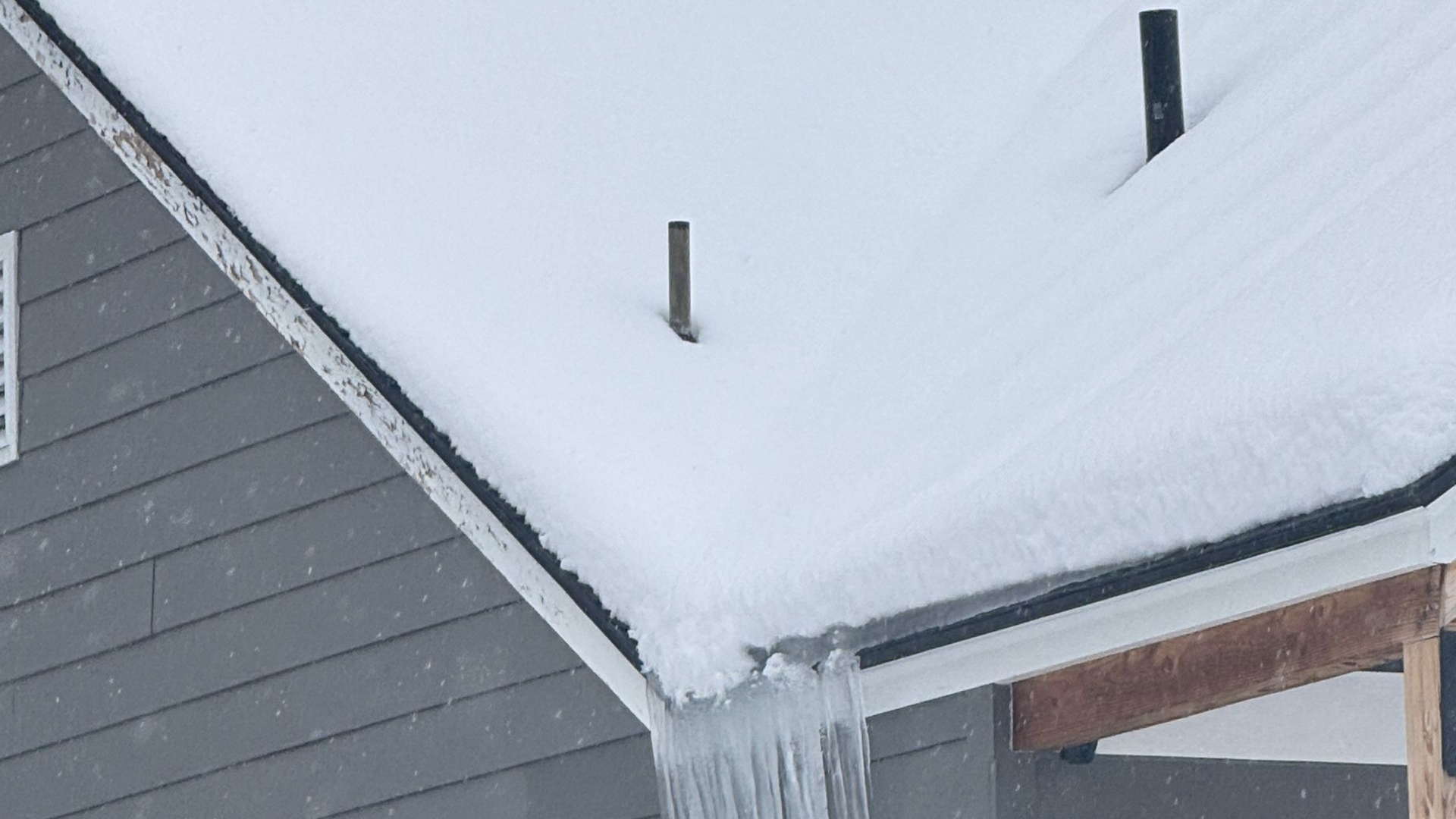
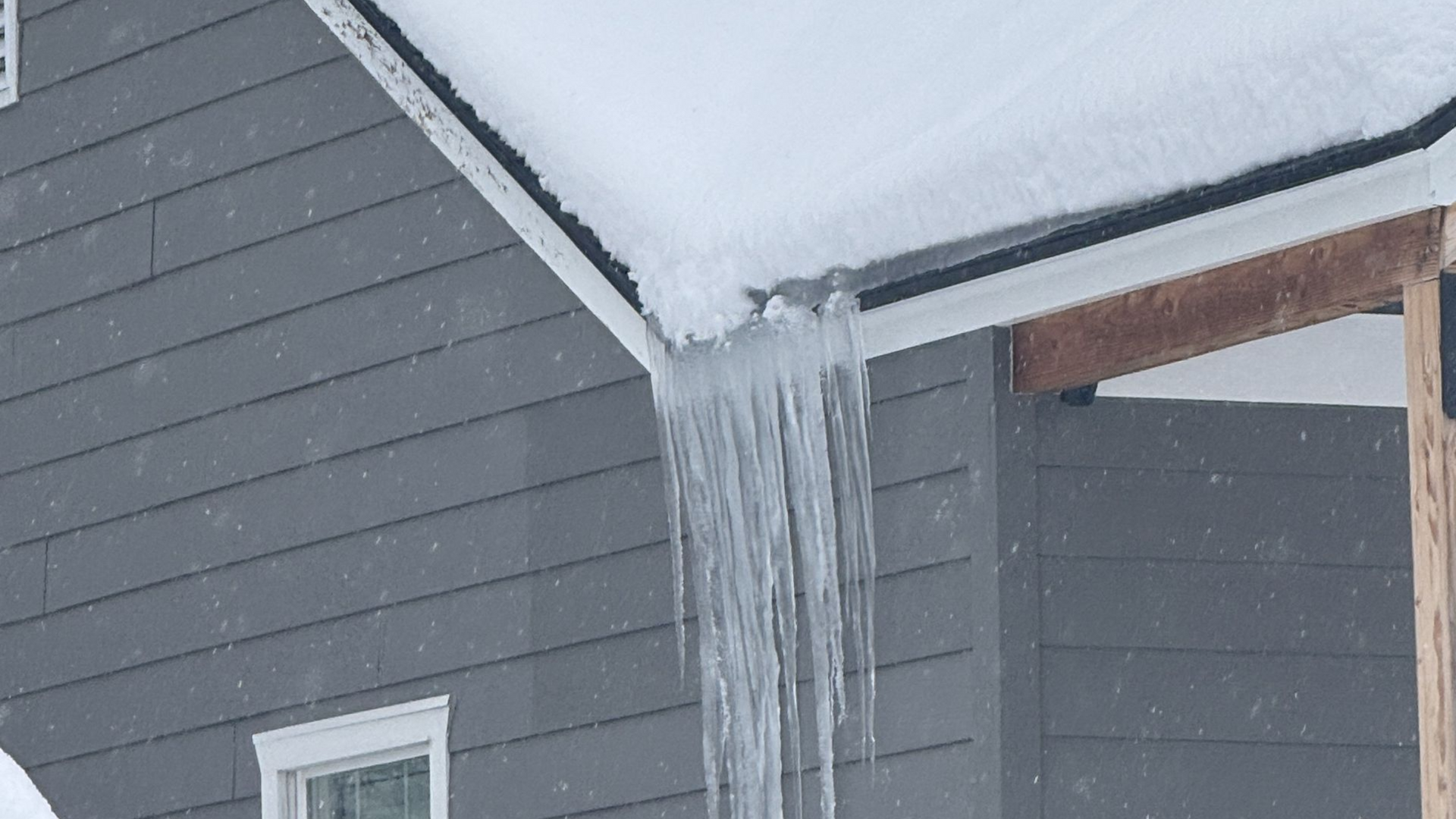
- Ice dams. The colder the top of the insulation stays, the less snow melts from underneath. The last few inches are the ones in contact with the attic air, and on a house that has grown ice dams that margin matters.
- Resale. "Attic insulated to current code, R-60" is a line a listing agent will use. "R-49" raises the question of why not.
When R-49 is the right call. Low-slope roofs where the eaves cannot hold 17 inches without blocking the soffit vents; attics with ducts or equipment that need to stay accessible; and homes heating with a heat pump where the dollar difference is under $10 a year. In those cases we blow R-49 across the full ceiling, which the code allows, and put the money into air sealing instead.
When removal-first beats topping off
Topping off is the cheap route: leave the old insulation, blow new cellulose over it, done. It is also the right route most of the time. Clean, dry, settled fiberglass is still insulation, and burying it under 12 inches of Clean Fiber costs a fraction of hauling it out.
But "most of the time" is not "always." Four things turn the old insulation from an asset into a liability, and if any of them is up there, new insulation on top makes the problem permanent and harder to reach.
Mold. If the sheathing or the insulation shows black or white growth, the attic has a moisture problem, usually a bath fan dumping into the attic or warm house air condensing on a cold roof. Covering it traps the moisture and hides the growth. The fix is removal, treatment, correcting the cause, and then insulating, which is why attic mold is a two-day job, not a top-off.
Smoke. After a wildfire smoke summer, the old insulation is holding soot, ash, and the compounds that produce the smell. Bury it and the smell does not go away. It comes back every spring when the attic warms up, now from underneath 17 inches of new material. Smoke-contaminated insulation comes out first.
Rodents. Droppings, urine, and nesting in the insulation are a health hazard and a smell source, and the trails invite the next tenants. New cellulose on top gives them a warmer place to live. Rodent-contaminated insulation is removed, the attic is sanitized, and the entry points are sealed before anything new goes in.
Vermiculite. Gray-gold pebbles underneath the fiberglass means a 1940s-to-1990 attic that may contain asbestos. Nobody should disturb it, including an insulation crew dragging a hose across it. Testing comes first; if it is positive, licensed abatement is the only legal path, and the Zonolite Attic Insulation Trust reimburses part of the cost.
There is a fifth, less dramatic case: insulation that got wet from a roof leak and dried compressed and matted. It has lost most of its R-value and holds the stain and smell of whatever came through the roof. If a section looks flat and dark compared to the rest, we remove that section and blow the whole attic fresh.
Removal adds cost, typically $1.50 to $3.00 per square foot. It also means the new insulation is the only insulation, which is the point.
Which one you need: a hatch test and what the inspection adds
From the hatch, with a flashlight, check five things:
- Depth. Under 8 inches almost anywhere means you are at R-19 or below and the upgrade pays.
- Color. Gray-gold pebbles: stop, vermiculite. Black or white fuzz on the wood: mold. Gray film on top of light-colored insulation: smoke.
- Trails. Tunnels, dark lines, or droppings on the surface: rodents.
- Flat spots. Sections that look pressed down and darker than the rest: water, past or present.
- Smell. Sharp and acrid is smoke. Musty and sweet is mold or rodents. Open the hatch on a warm afternoon for the honest version.
If all five come back clean, you are a top-off candidate and the only remaining question is R-49 or R-60. If any one of them does not, the old insulation has to come out, and the inspection decides how much.
Our attic inspection takes about an hour and adds what you cannot see from the hatch: a depth reading every 10 feet, a count of the can lights, fans, and penetrations that need sealing, a check of the bath fan terminations, soffit vent condition, and a moisture reading of the sheathing. You get photos, a written report, and one fixed price for whichever path the attic needs. Book it here.
Do the math before the heating season does it for you
An R-19 attic in Spokane sends about $200 a year up through the ceiling on gas and over $400 on electric, before air leakage. R-60 cuts that to $65 and $137. That is not the whole bill, but it is the part you can fix in one day and never think about again.
The cost of waiting is not just a winter of higher bills. It is a winter of a warm roof deck, which is where ice dams start, and a winter of furnace cycles pulling attic air through whatever the old insulation is holding. If the hatch test above turned up anything but clean, every heating day between now and spring makes it a little worse.
Book your attic inspection at insulationspokane.com/inspections or call (509) 879-0495.
You will know your R-value, whether the old insulation stays or goes, and what the fix costs, before the first snow.
Selling this winter? Buyers' inspectors measure attic depth. The Home Sale Hotline is (509) 351-2811.
Pacific Insulation & Mold Remediation has served Spokane and Coeur d'Alene since 2012 with over 135 five-star Google reviews. Licensed and insured: WA Lic. #PACIFIL886KH, ID Lic. #RCE-47538. Make sure your contractor is local, licensed and insured at LNI.WA.GOV.
Everything Attic. Except Bats. We're Terrified of Bats.
Follow us