What Causes Ice Dams in Spokane (And How to Stop Them for Good)
Is Heat Leaking Out of Your House Into the Attic?
Every January in Spokane, the same thing happens: a good snow, a cold snap, and suddenly half the roofs in the neighborhood are growing icicles the size of baseball bats. It looks like a postcard. It's actually your house telling you something is wrong in the attic.
We've been in Spokane and Coeur d'Alene attics since 2012, and ice dams are one of the most misunderstood problems we see. So here's the straight answer to what causes them — and why the permanent fix isn't on your roof at all.
What causes ice dams?
An ice dam needs three ingredients:
- Snow on the roof
- Freezing air outside
- Heat leaking out of your house into the attic
You can't control the first two in Spokane. The third one is the whole ball game.
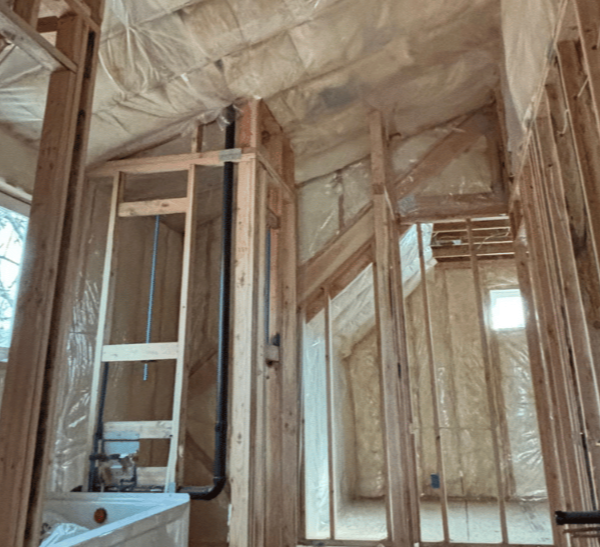
Here's the cycle: warm air from your living space leaks up into the attic through gaps around can lights, bath fans, the attic hatch, wiring holes, and top plates. That warm attic heats the roof deck from below and melts the bottom layer of snow — even when it's 15 degrees outside. The meltwater runs down the roof until it hits the eaves, which hang out past your walls and stay cold. There, it refreezes.
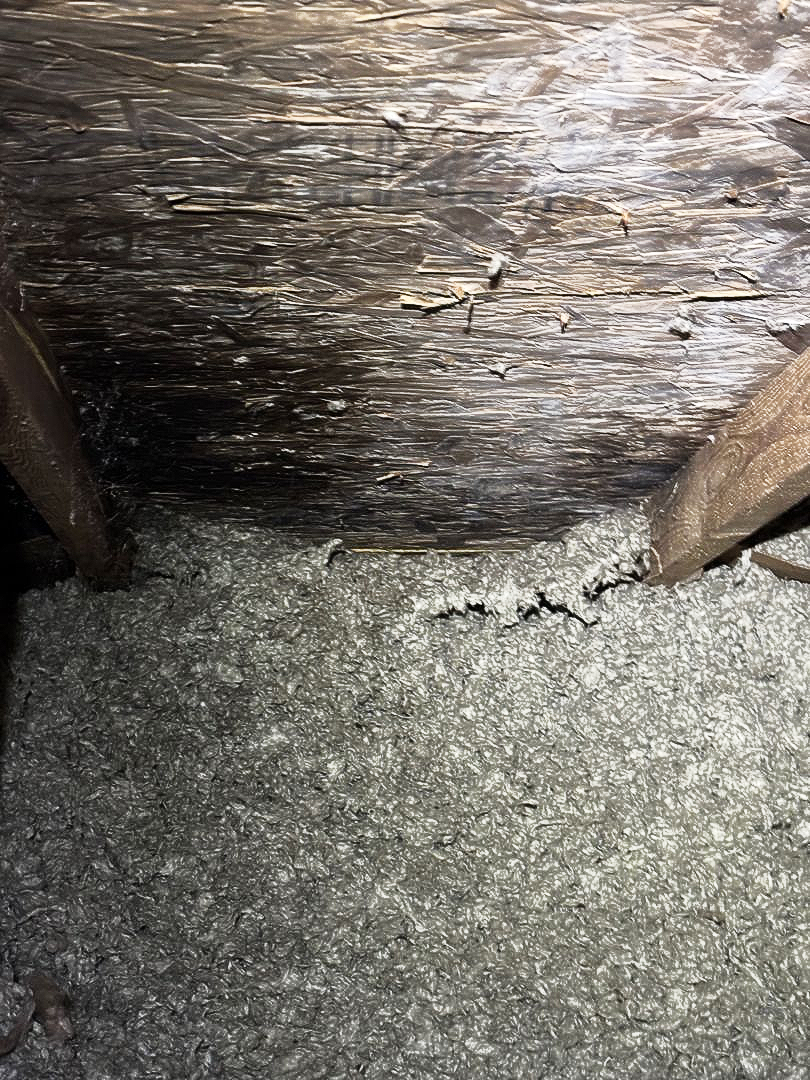
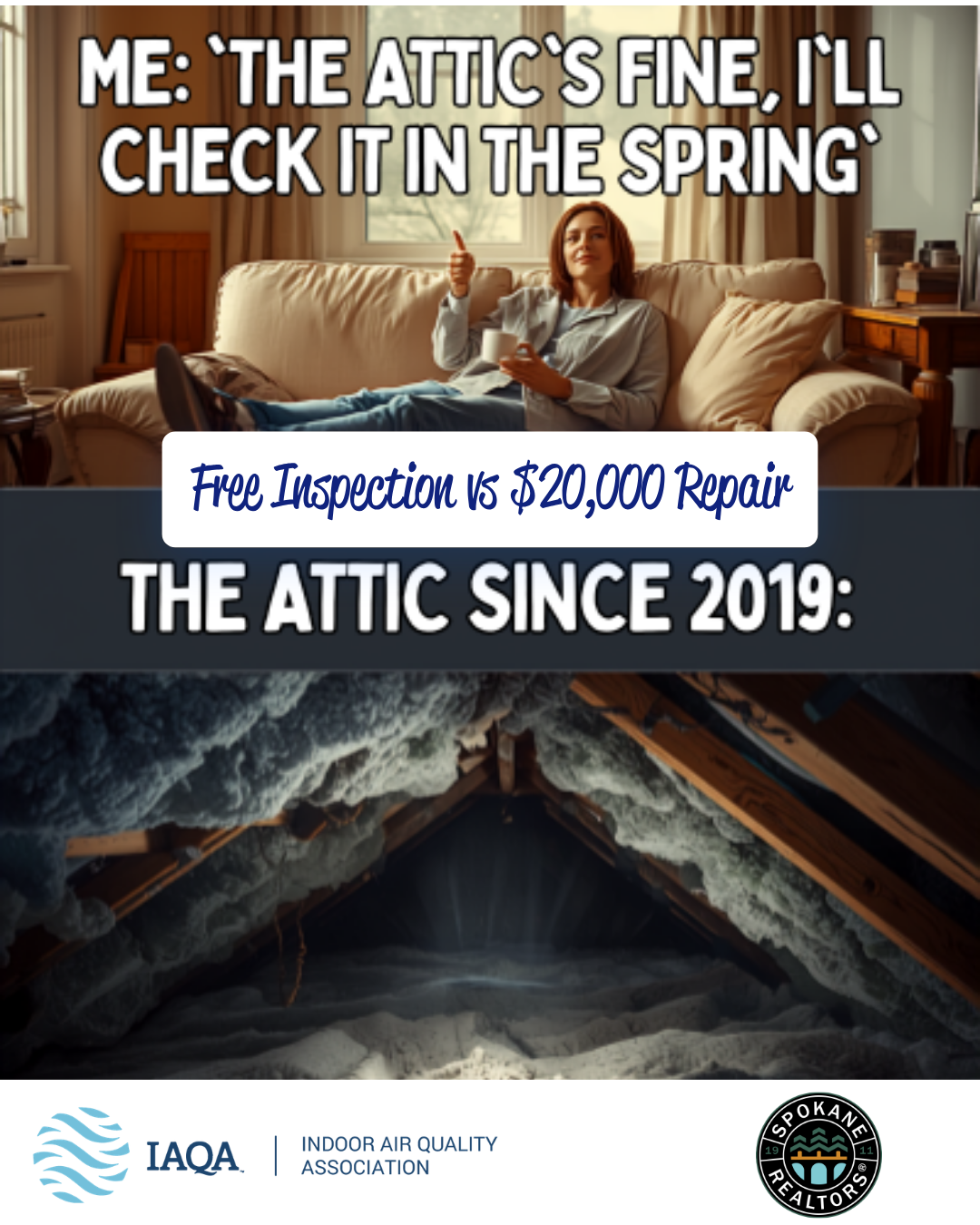
Do that for a few days and the refrozen ridge grows into a dam. New meltwater pools behind it with nowhere to go — so it backs up under your shingles and into the house. That's when you get wet insulation, stained ceilings, peeling paint, and the kind of hidden moisture that grows attic mold by spring.
The icicles aren't the problem. They're the symptom. If your roof grows big icicles and your neighbor's doesn't, the difference isn't the weather — it's how much heat your attic is leaking.
Why Spokane homes get ice dams so badly
Two reasons.
Our winters are built for it. Spokane's freeze-thaw pattern — snow, sun, single-digit nights — is exactly the melt-refreeze cycle that builds dams. Add a heavy snow year and the insulating snow blanket keeps the roof deck warm enough to keep melting from below.
Our housing stock is under-insulated. There was no energy code before 1977, and homes built before then typically have around R-9 to R-11 in the attic. Today's code calls for R-49 or better. That means thousands of Spokane and CDA homes are running with a fifth of the insulation they should have — pumping heat into the attic all winter and paying for it twice: once on the Avista bill, once on the roof.
What doesn't fix ice dams
Plenty of things manage ice dams. Almost none of them fix the cause:
- Roof raking removes the fuel (snow), but you have to do it after every storm, forever — and partial raking can actually move the dam higher up the roof.
- Heat cables melt drainage channels through the ice. They treat the symptom, run up your power bill, and quit working the day they fail.
- Chipping or hammering ice off is the fastest way to trade an ice dam for a roof repair.
- Salt pucks stain shingles and dump chloride into your gutters and landscaping.
If you already have a dam backing water into the house, professional steam removal is the safe emergency option. But if you're removing ice dams every winter, you're paying an annual subscription to a problem that has a one-time fix.
The permanent fix: a cold roof
Ice dams can't form on a roof that stays as cold as the outside air. Roofers call this a "cold roof," and it comes from fixing the attic, not the shingles:
1. Air seal the attic first. Before a single flake of insulation goes in, every bypass gets sealed — can lights, bath fan housings, plumbing and wiring penetrations, top plates, the attic hatch. Air leaks carry far more heat into an attic than conduction does. This is the step most ice dam "solutions" skip, and it's why they fail.
2. Insulate to R-49–R-60. With the leaks sealed, we blow in Clean Fiber cellulose to current code depth. Now the heat you pay for stays in the house, and the roof deck stays cold.
3. Correct the ventilation. Soffit and roof vents flush out whatever warmth and moisture still sneaks through, keeping the deck within a few degrees of outdoor air — and preventing the frost and condensation that feed attic mold.
Do those three things and the melt-refreeze cycle never starts. No cables, no raking, no January ladder work. As a bonus, the same fix cuts winter heating bills, keeps upstairs rooms cooler in August, and is exactly the upgrade Avista, Inland Power, and Kootenai Electric pay rebates for — recently as high as $1.50 per square foot for attic insulation (program terms change yearly, and we handle the rebate paperwork with you).
How to tell if your attic is the cause
You don't have to guess:
- Look at your roof after a snow. Bare or patchy melt spots while neighbors' roofs stay white = heat escaping. Snow that melts evenly from the eaves up while temps are below freezing = heat escaping.
- Big icicles at the eaves and valleys = meltwater refreezing where it shouldn't be.
- Frost on the underside of the roof deck or musty smells from the attic = warm moist air getting up there.
- Thermal imaging takes the guesswork out entirely. Our infrared camera shows exactly where warm air is pouring into your attic — every unsealed can light shows up like a spotlight.
Frequently asked questions
Do ice dams mean I need a new roof? Usually not. Ice dams are an attic problem wearing a roof costume. If water has already gotten under the shingles, have the roof checked — but replacing the roof without fixing the attic just puts new shingles under next year's dam.
Will adding insulation alone stop ice dams? It helps, but insulation without air sealing is like a winter coat with the zipper open. Warm air moves through and around insulation via unsealed gaps. Air seal first, then insulate — always in that order.
Should I remove an ice dam that's already formed? If water is coming inside, yes — safely, by steam, not by chipping. Then fix the attic so you never do it again. If it's not leaking, removing snow with a roof rake from the ground and scheduling the attic fix is the smarter money.
What R-value do I need in Spokane? Current code for our climate zone calls for R-49 minimum in the attic; we typically install R-49 to R-60. Pre-1977 homes usually start at R-9 to R-11, so most attics we open need a full top-off.
Is my wet insulation ruined? Probably. Soaked insulation loses its R-value and can grow mold within days. If an ice dam has leaked into your attic, the wet material should come out — we remove it, dry and treat the cavity, and re-insulate to code, with documentation your insurance adjuster can use.
Stop paying for the same winter twice
If your roof grows icicles every year, the fix is one project, not an annual ritual. We'll come out, put the thermal camera on your attic, show you exactly where the heat is escaping, and give you a written plan with line-item pricing — air sealing, insulation, ventilation, and any rebate you qualify for.
Free ice dam & attic heat loss inspections — call or text (509) 879-0495 or book online at insulationspokane.com/inspections.
Local, licensed & insured in Spokane & Coeur d'Alene since 2012 · WA Lic. #PACIFIL886KH · ID Lic. #RCE-47538 · 135+ five-star Google reviews.
Everything Attic. Except Bats. We're Terrified of Bats.
Click here to: Schedule an Inspection
Follow us