New Construction Insulation: Why the Cheapest Bid Costs You for 50 Years
What Spokane builders and owner-builders rebuilding after the fires should demand from an insulation bid.

Hundreds of Spokane County families are about to become owner-builders whether they planned on it or not. The rebuild from the August fires is underway from Nine Mile Falls to Medical Lake, framing packages are getting ordered, and every one of those homes is going to hit the same milestone in a few months: the insulation bid.
Here's what makes insulation different from almost every other line on the build sheet. Pick the wrong faucet, you swap it in an afternoon. Pick the wrong paint, you repaint. Pick the wrong insulation package, and the mistake is sealed behind drywall for the life of the house. You'll pay for it every January and every August for fifty years, in a bill that never itemizes the reason.
The cheapest insulation bid is almost always cheap in exactly the places you can't see and can't fix later. Here's where, and what to demand instead.
The wall between "meets code" and "built right"
Washington's energy code sets a minimum, and "code-minimum" is the phrase to listen for in a bid, because code minimum means "the worst insulation the law allows." Every house we insulate could legally have less. The question is whether you want the house you'll heat through a Spokane winter built to the legal floor.
The difference between the floor and done-right is small money on build day. It's the difference of a few hundred dollars in material while the blower is already on site, against three hundred-plus utility bills over the next few decades that each come in a little higher than they needed to be.
R-49 vs. R-60 in the attic: the cheapest upgrade you'll ever buy
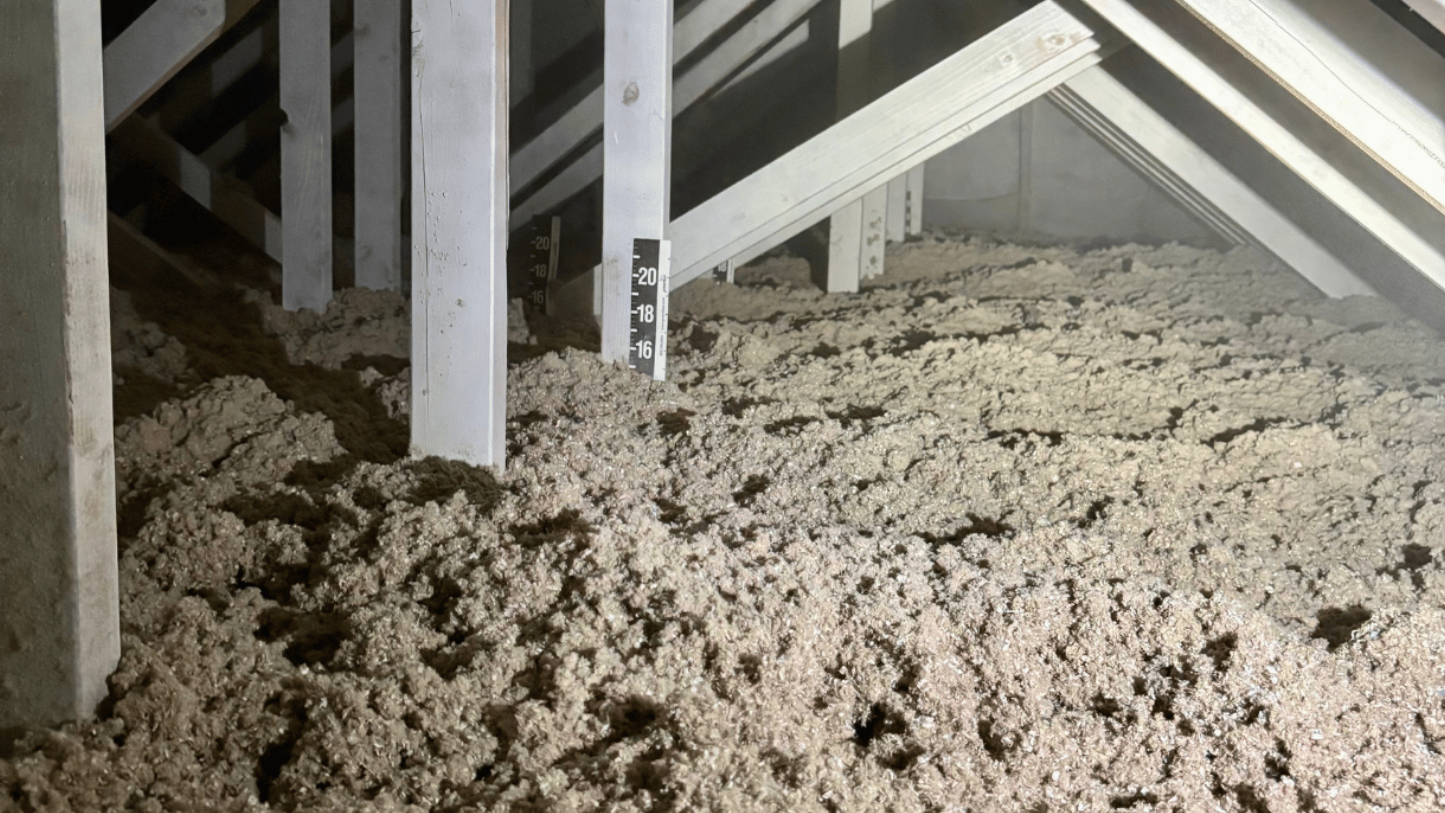
Blown-in attic insulation is priced mostly by depth, and the machine is already there. Going from R-49 to R-60 in a typical Spokane attic costs less than most people spend on the front door hardware, and unlike the hardware, it pays you back every month.
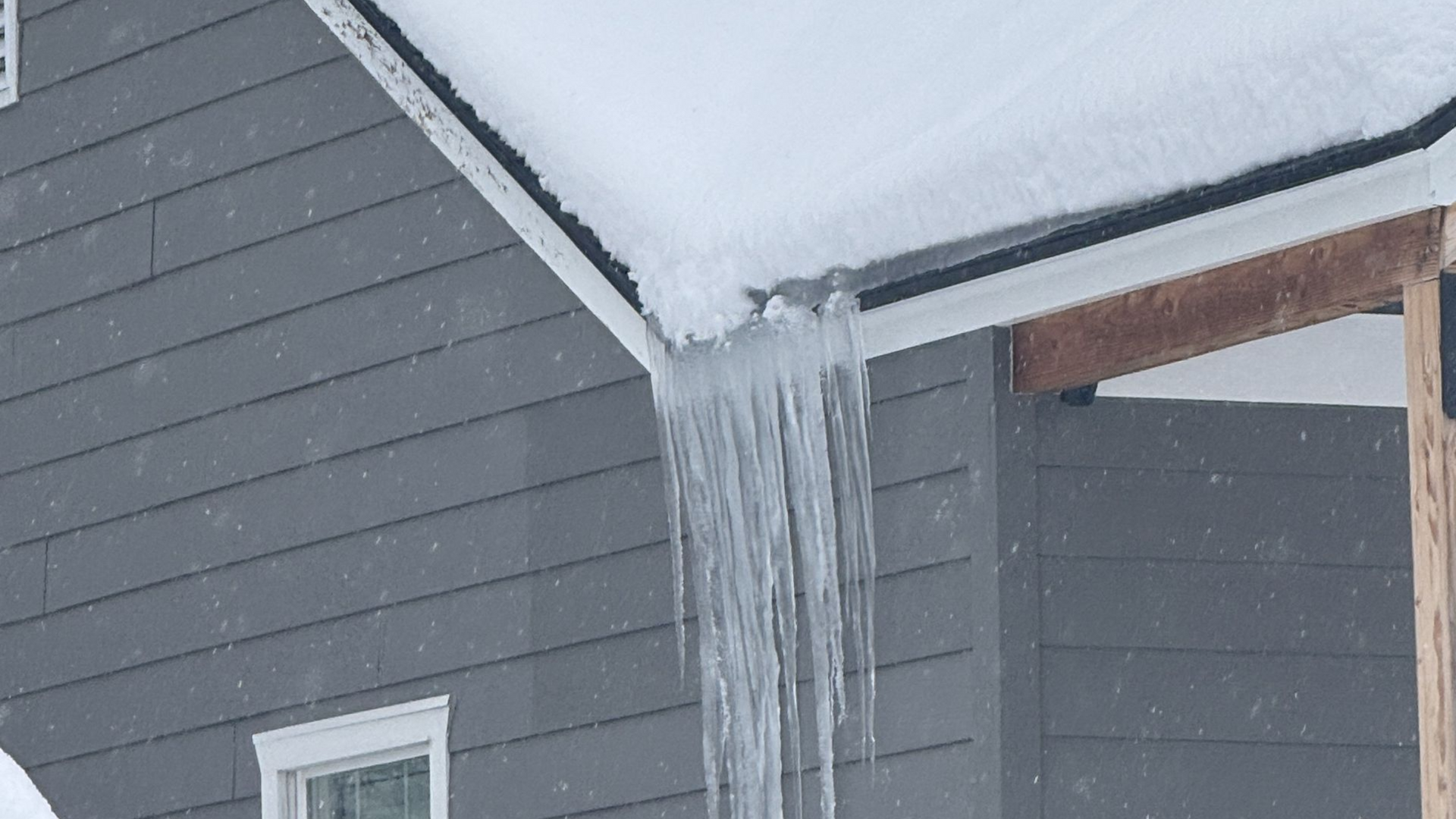
Spokane sees design temperatures around 0°F and triple-digit summers, and the attic is where a house wins or loses on both. R-60 also keeps the roof deck colder in winter, which is your first line of defense against the ice dams that chew up eaves across Mead, Colbert, and Deer Park every February.
We blow Clean Fiber cellulose: recycled, borate-treated, naturally resistant to mold, rodents, and fire. That last one is worth a sentence on its own in a county that just watched 900 structures burn. Cellulose with borate fire retardant doesn't add fuel to an attic; loose fiberglass doesn't slow anything down.
Cheap-bid version: R-49, or "code," with no depth markers and no certificate. Ask for R-60, depth markers stapled to the trusses, and the insulation certificate for your file, because your appraiser and your energy-code inspector both want it anyway.
Air sealing before drywall: the step the cheap bid skips entirely
This is the single biggest difference between bids, and it's invisible on the quote unless you know to look for the line.
Before insulation means anything, the holes have to be sealed: top plates, wiring and plumbing penetrations, can lights and fan boxes, the gaps around windows and doors, chases, and the attic hatch. A new house that skips air sealing leaks conditioned air through hundreds of small openings, and no R-value fixes an air leak. Air sealing is also the step that prevents the attic mold we get called to remediate in ten-year-old houses, because the same leaks that waste heat carry moisture into the attic all winter.
The only time air sealing is cheap and easy is before drywall. After drywall it's an archaeology project. If the bid doesn't have an air sealing line item, the number isn't lower because they found an efficiency; it's lower because they're not doing it.
Rim joists: the forgotten thirty feet
The rim joist, where the floor framing meets the foundation, is the coldest, leakiest, most-skipped framing in the house. Uninsulated or stuffed with a loose scrap of fiberglass, it's a ring of cold running the entire perimeter of your floor, and it's why so many Spokane basements and bonus-room floors are cold no matter what the thermostat says. Done right, rim joists are sealed and insulated as their own scope, not an afterthought. Ask the bidder what, specifically, happens at the rim. If the answer is a shrug, that's your answer.
Sound batts: the upgrade you'll notice every single day
Not every insulation dollar is about heat. Sound batts in the interior walls around bedrooms, bathrooms, the laundry, and the media room are cheap while the walls are open and impossible after. Nobody has ever finished a build and said they wished they could hear the toilet more clearly from the dining room. If you're rebuilding, this is the one thing the old house didn't have that the new one should.
Vaulted ceilings: where cheap bids fail inspections and grow ice dams
Vaults are the hardest insulation detail in the house: limited depth, ventilation baffles that have to run eave to ridge, and no attic above to hide mistakes in. A cheap bid treats a vault like a wall. The result shows up as ice dams on the vaulted section the first snowy winter and, a few years later, as the dark stains of condensation mold on the ceiling. Vaults need the right combination of baffles, high-density material, and air sealing at the ceiling plane, engineered for the actual rafter depth, and the bid should say so in writing.
What a real new-construction bid looks like
When we bid a new build, the request comes through our New Construction Insulation Bid form and covers, room by room: wall insulation by cavity depth, floor insulation, vaulted ceiling detail, attic blow-in at R-49 or R-60, sound batts by wall, rim joists, and air sealing, with job site photos so we're bidding the framing that exists, not the framing on the plans. Builders get line-item pricing they can hand straight to the owner, and owner-builders get the same sheet with nothing hidden in an allowance.
That itemization is the point. A one-line bid ("insulate house, $X") is where the 50-year mistakes hide. A line-item bid is one you can compare, verify at walkthrough, and hold to at the blower-door test.
For the fire rebuilds, two more things
Your insurance scope probably reads "code minimum." The gap between that and R-60-plus-air-sealing is small, and it's the best use of any upgrade dollars in the entire build. Some code-upgrade endorsements will carry part of it; ask your adjuster.
Schedule insulation before you're desperate. Every rebuild in the county is going to hit drywall stage within a few months of each other. The builders who get on the insulation schedule at framing, not at drywall, are the ones who won't be waiting.
Get the bid
Builders and owner-builders: request a new-construction bid at insulationspokane.com or call (509) 879-0495 and we'll get you the room-by-room form. We serve Spokane, Spokane Valley, Liberty Lake, Cheney, Airway Heights, Medical Lake, Mead, Colbert, Deer Park, Nine Mile Falls, Post Falls, and Coeur d'Alene, and yes, we drive to the Palouse.
Everything Attic. Except Bats. We're Terrified of Bats.
Follow us