The Spokane Wildfires Are Contained. The Smoke in Your Attic Isn't.
Spokane Wildfire Smoke Health
Three weeks ago, the weekend of August 2–3, the Old Trails Fire north of Airway Heights, the Autumn Lane Fire near Nine Mile Falls and Suncrest, and the Fairview Fire near Mead tore through more than 10,000 acres of Spokane County. Roughly 67,000 people were told to leave. Over 900 structures were damaged or destroyed. By mid-August the fires were mostly contained and the evacuations were lifted, and families across the county started coming home.
Most of those homes are still standing. And most of them have the same problem: they smell like a campfire, and it isn't going away.
If you live anywhere from Airway Heights to Mead, Nine Mile Falls to the South Hill, Cheney to Liberty Lake, your house sat in heavy smoke for days. The Spokane Regional Clean Air Agency had the region in the unhealthy range for stretches, and with red flag warnings back in the forecast this weekend, it's not over yet. Here is what that smoke did to the part of your house you never look at: the attic.
Your attic is the lungs of your house, and it just inhaled a wildfire
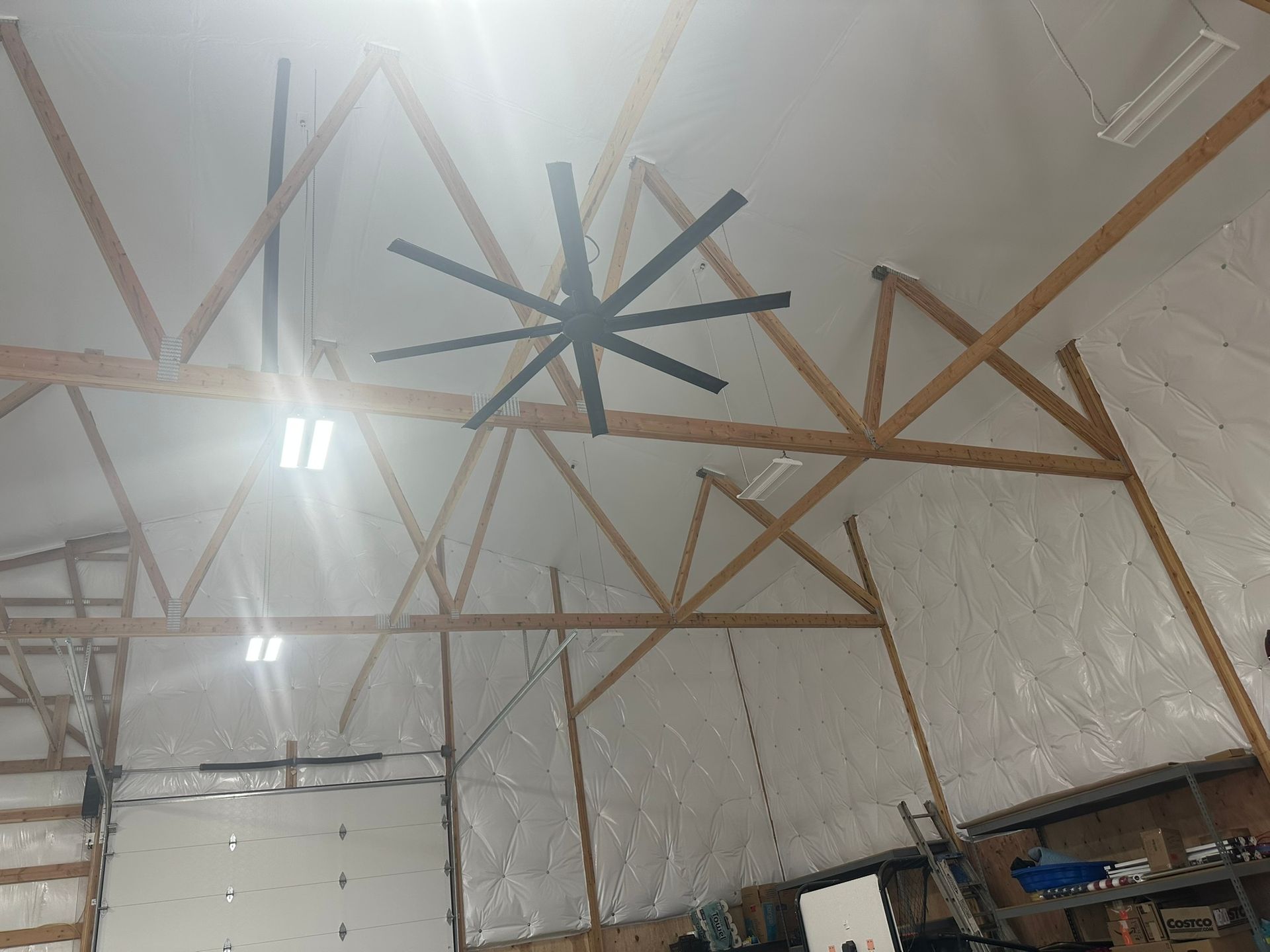
Attics aren't sealed. They're built to breathe. Soffit vents pull air in low, ridge and gable vents push it out high, and on a hot August day that airflow runs all day long. When the air outside is full of smoke, your attic is pulling that smoke through itself like a furnace filter that never gets changed.
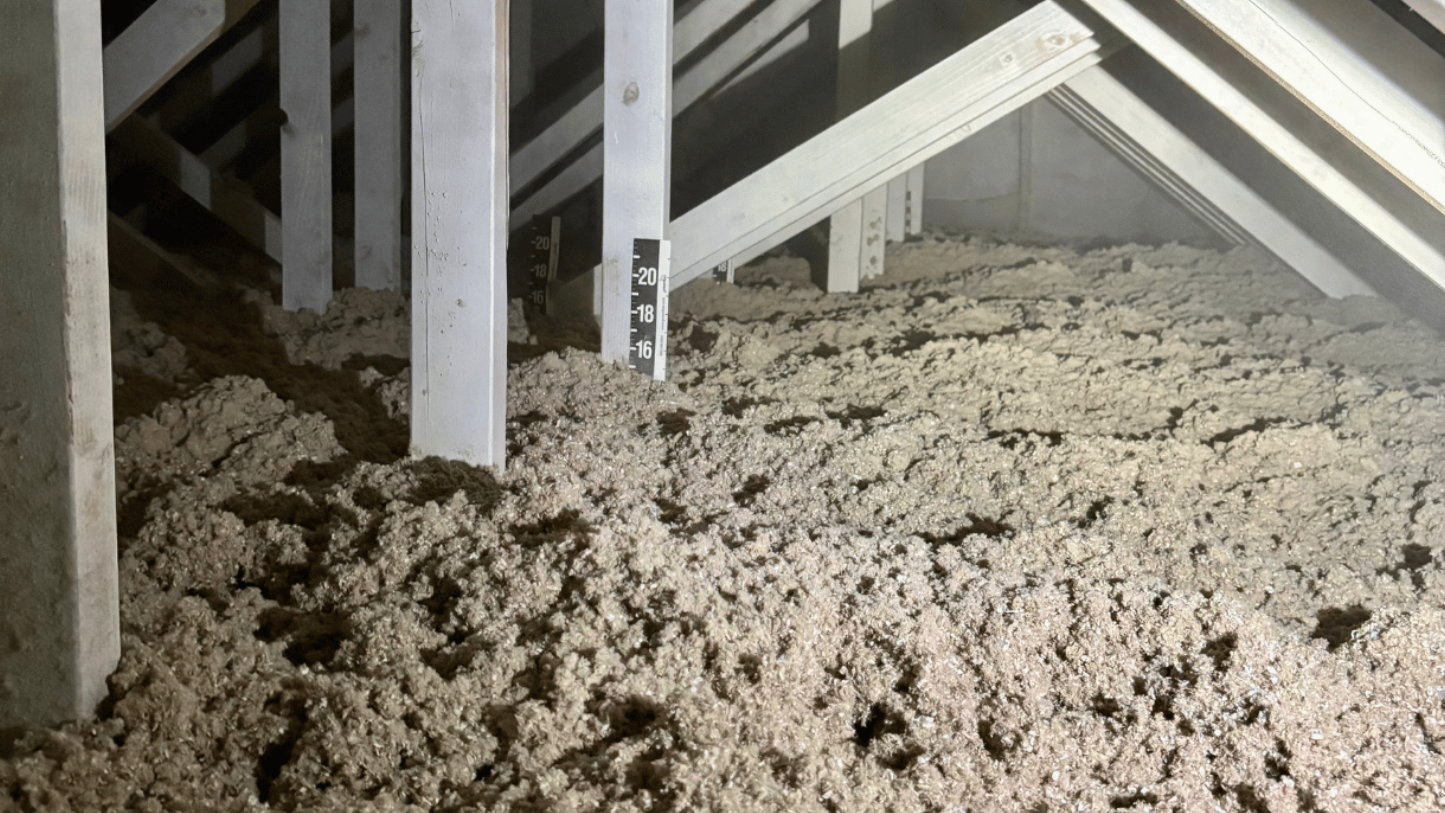
Inside that attic is insulation. Blown-in cellulose, blown-in fiberglass, old batts, and in plenty of Spokane homes built before 1990, vermiculite. Every one of those materials has an enormous amount of surface area. A single attic of blown-in insulation has more square footage of fiber surface than a football field. That's exactly what makes it good at trapping heat. It's also exactly what makes it good at trapping smoke.
What wildfire smoke actually leaves behind
Wildfire smoke isn't just a smell. It's a mix of ultrafine particulate (the PM2.5 on the air quality reports), soot, ash, and a long list of volatile and semi-volatile organic compounds. When the Old Trails and Autumn Lane fires were burning through homes, outbuildings, vehicles, and everything in them, that smoke also carried plastics, treated lumber, and other things you'd never want in your living space.
Here is what happens when that smoke passes through insulation:
The particulate gets filtered out and stays. Soot and ash settle onto and into the fibers. Blown-in cellulose is especially absorbent. You can't vacuum it out, and you can't air it out.
The odor compounds bond to the material. Smoke odor isn't loose. It's chemically attached to porous surfaces. Insulation is about as porous as a material gets.
Heat re-releases it. This is the part that surprises homeowners. Your attic hits 130–150°F on a sunny afternoon. That heat bakes the smoke compounds back out of the insulation, and they drift down through can lights, attic hatches, bathroom fans, and every gap in your ceiling. That's why the house smells fine in the morning and smells like a burn pile by 4 pm.
It finds the HVAC. If your furnace or ductwork runs through the attic (common in Spokane ramblers and split-levels), smoke-loaded attic air gets pulled into the system through leaky duct joints and distributed to every room.
The signs your attic insulation took the smoke
You don't need to climb up there to suspect it. Watch for these:
The smell comes and goes with the heat of the day. Stronger in the afternoon, stronger upstairs, stronger near ceiling fixtures.
You've cleaned, washed curtains, wiped walls, run air purifiers, and it helps for a day and comes back.
There's a gray or tan film on the top of the insulation when you open the attic hatch, or a visible layer of ash near the vents.
Allergies or scratchy throats that started after the fires and haven't stopped, especially in kids.
Your home is within a few miles of any of the fire perimeters, or sat downwind for the first week of August.
"Can't I just air it out?"
Ventilation helps with the loose stuff in your living space. It does almost nothing for insulation. The material is the sponge, and the smell lives in the sponge. Ozone treatments and fogging can knock odors down in the rooms you live in, but they don't penetrate twelve inches of blown-in cellulose, and they definitely don't remove ash and soot that's physically sitting in it.
Here's the honest rule of thumb: if the smoke reached the insulation, the insulation is the problem. Treating the symptoms downstairs just buys you a few days.
What actually fixes it
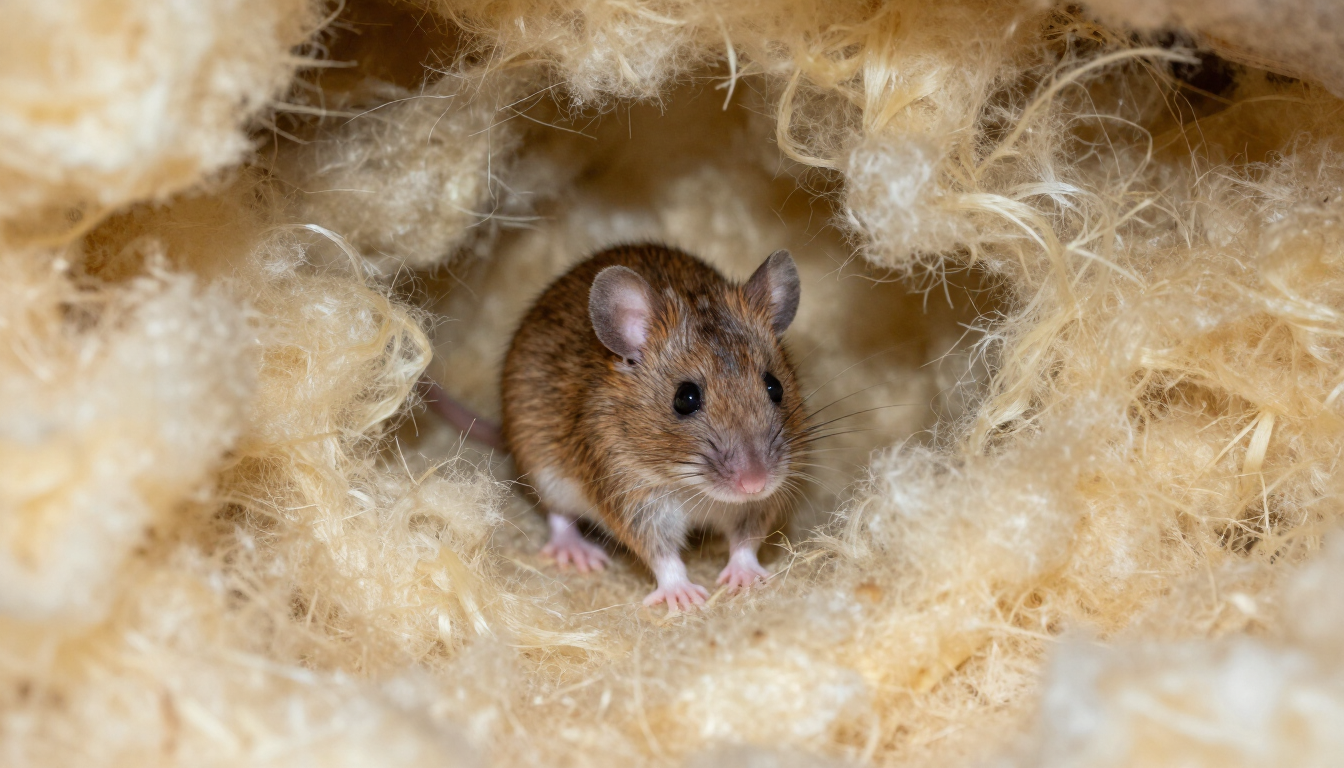
The fix is the same one we use for mold-contaminated and animal-contaminated attics, because the problem is the same: the material itself is holding the contamination.
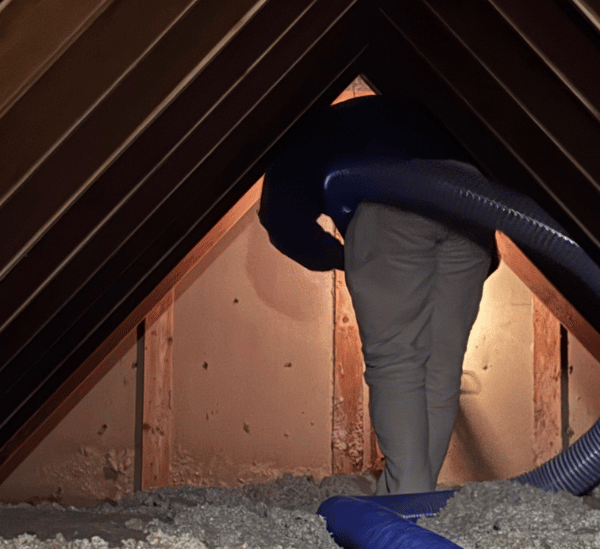
1. Remove the smoke-damaged insulation. We vacuum it out with a commercial insulation removal vacuum that runs to a truck outside. Nothing gets carried through your house. Our crews work under supplied-air respirators, and if the attic has vermiculite, it's treated as asbestos-containing and removed under full abatement protocol. (A lot of Spokane and Coeur d'Alene attics have vermiculite, and wildfire ash on top of it is not something you want to disturb yourself.)
2. HEPA vacuum and clean the attic floor, framing, and ductwork exterior. Soot on the joists and drywall backside will keep off-gassing if you leave it.
3. Seal and treat. We apply an odor-sealing encapsulant to framing and sheathing where the smoke has soaked into the wood, and air-seal the ceiling penetrations that were letting attic air into your home in the first place.
4. Re-insulate. Fresh blown-in cellulose to R-49 or R-60. Your attic ends up cleaner, tighter, and better insulated than it was before the fire.
Most attics are a one-day job. You're in your home that night with no smoke smell, and your heating bill this winter thanks you.
Selling a home right now? Read this part.
Real estate in Spokane didn't stop because of the fires, and buyers are walking into homes and smelling smoke. Inspectors are noting it. Ash in the attic is showing up in inspection reports and it's becoming a negotiating point.
If you're listing a home anywhere near the burn areas, get the attic looked at before the buyer's inspector does. We run same-day real estate inspections and can usually turn around a smoke-damaged insulation removal before closing. Agents: call the Home Sale Hotline at (509) 351-2811 and we'll get out there.
Insurance note
If your home was in an evacuation zone or near the fire perimeter, smoke damage to insulation is often a covered loss under a homeowner's policy, even when the structure itself didn't burn. Document the smell, photograph the attic, and get a written inspection. We'll give you a report your adjuster can work with.
Get your attic checked
We've been in a lot of attics in the last three weeks, and the pattern is the same in Airway Heights, Nine Mile Falls, Suncrest, Mead, and all through north Spokane. If your house still smells like August 2nd, it's probably the insulation.
Book an attic inspection online at insulationspokane.com/inspections or call (509) 879-0495. Agents and sellers, use the Home Sale Hotline: (509) 351-2811.
Everything Attic. Except Bats. We're Terrified of Bats.
For more information or to schedule an inspection Click Here
Follow us