
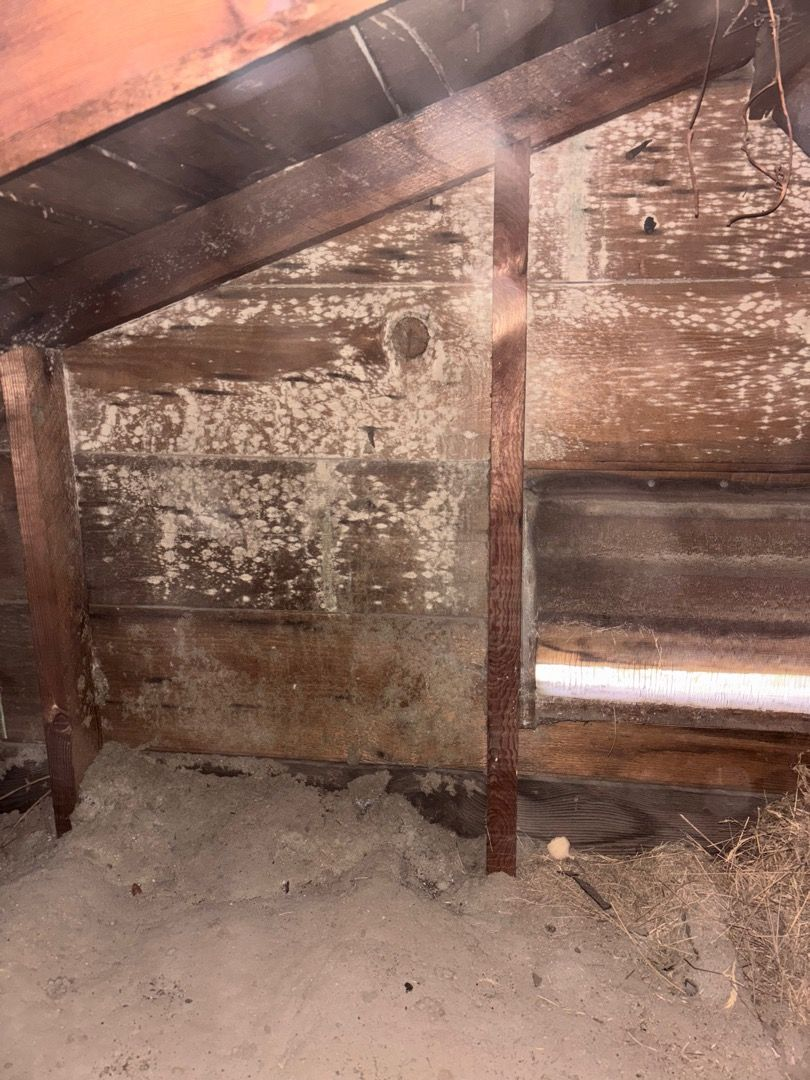
Every home has mold spores in the air. Not every home has mold growth. Growth means a moisture problem is feeding it somewhere.
Yes. Cut off the moisture and mold stops spreading. That’s why we diagnose the cause before we touch a single board.
Growth can begin in 24–48 hours and become visible within a week or two. A leak you “dried out” last spring may still be growing above the ceiling.
What Mold Looks Like Up Close — By Color
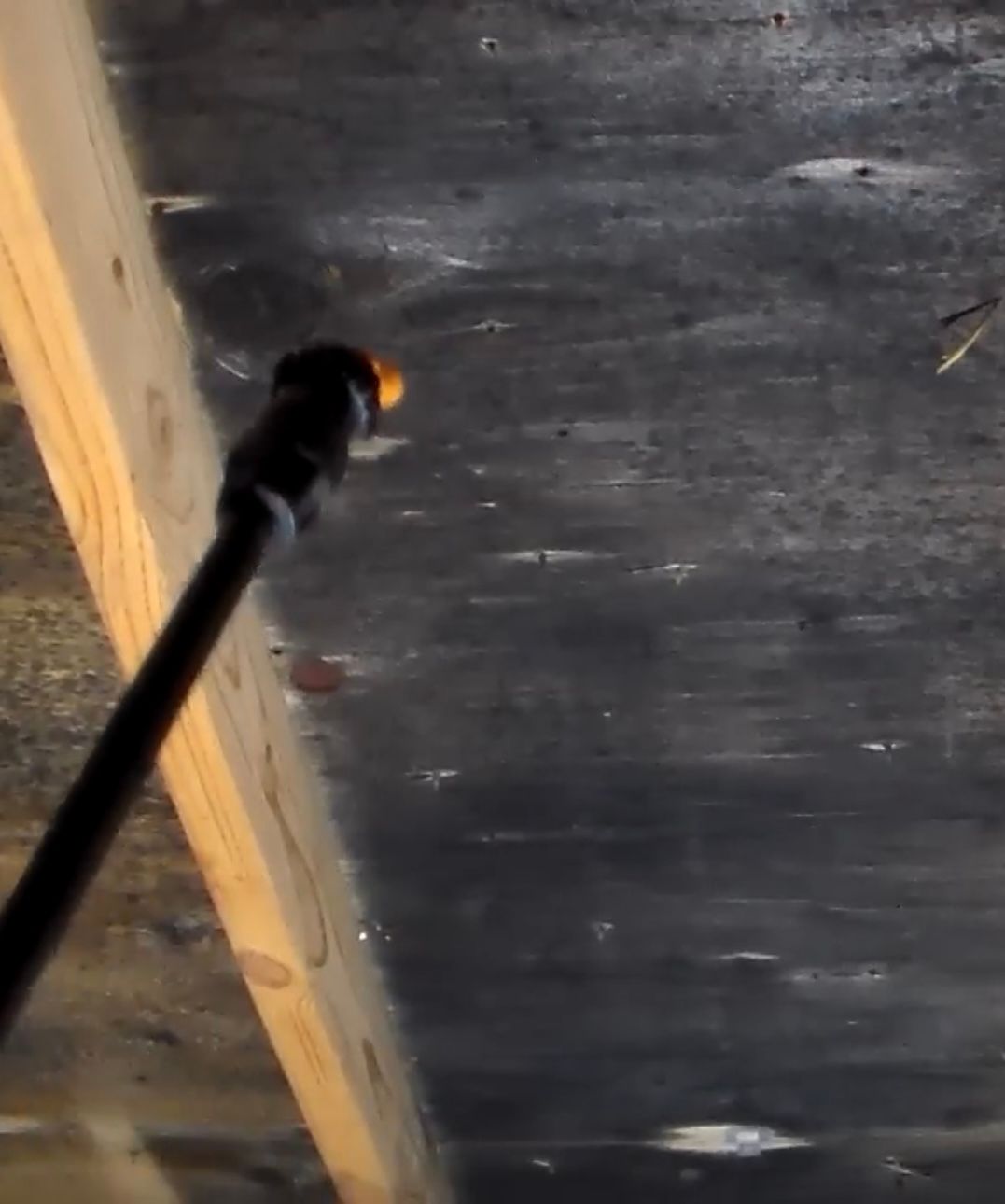
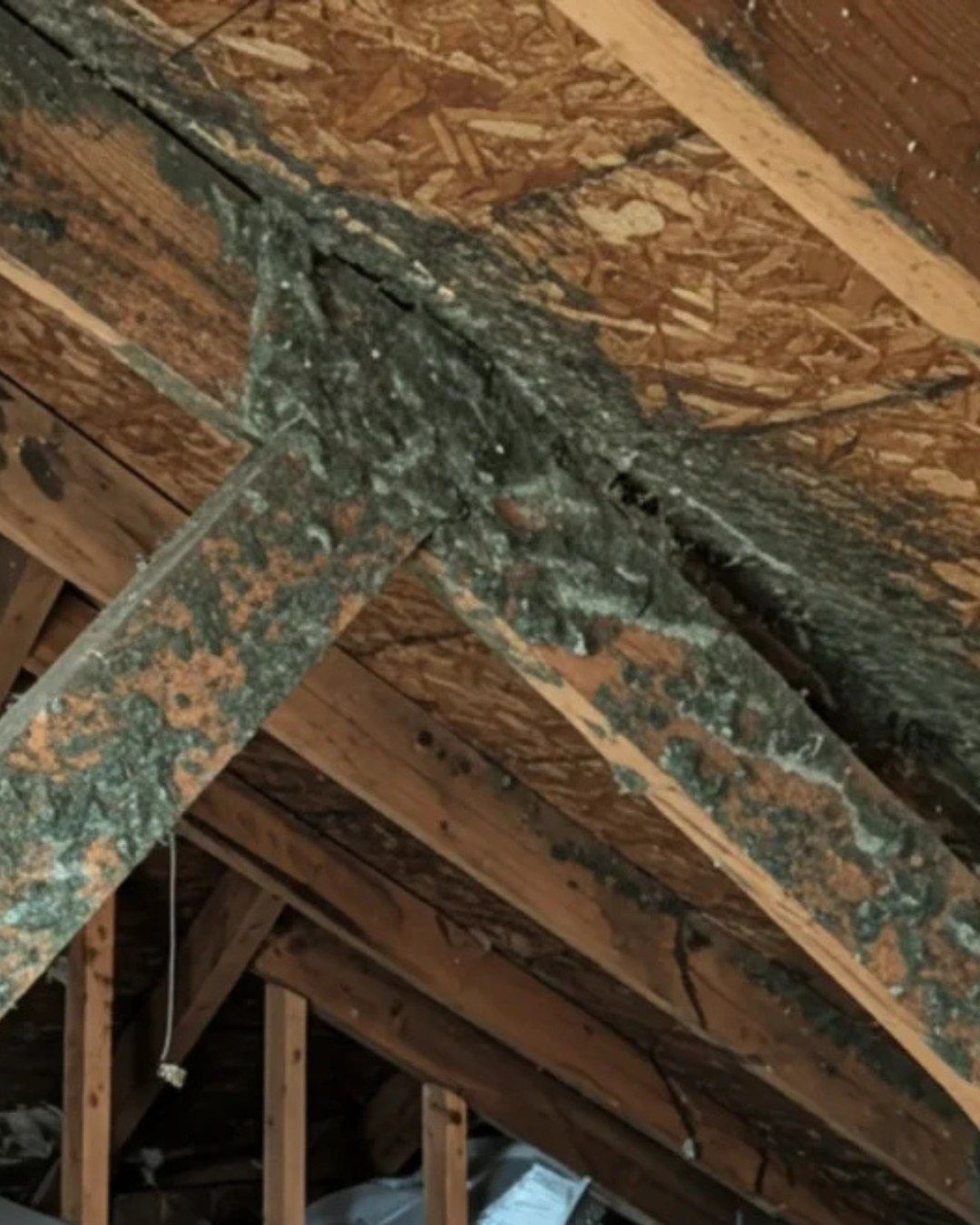
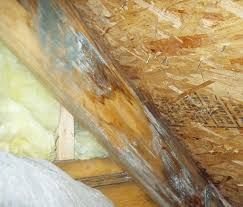
Color alone can’t tell you the species or how harmful it is — only a lab can do that. But color, texture, and location tell you a lot about where the moisture is coming from, and that’s what determines the fix. Here’s what we see most in Spokane homes.
What Does Toxic Mold Look Like?
You can’t tell “toxic” mold from harmless mold by looking at it, and most of what gets called toxic black mold online is ordinary Cladosporium. What matters is this: any indoor mold growth produces spores and fragments that irritate lungs, eyes, and skin, and some species produce mycotoxins. The amount of growth and how long you’ve been breathing it matters more than the color.
The five molds most often found growing indoors in the Inland Northwest:
Symptoms people search for
These are the things homeowners tell us they were Googling before they called. If several sound familiar and they improve when you leave the house, mold is worth ruling out.
Please note: We’re remediation contractors, not doctors. Mold affects people differently, and how long symptoms last depends on the person and the exposure. If you’re having symptoms, talk to your physician — and let us find out whether your home is the cause.
What Mold Needs to Grow — And How It Gets in Your House
Mold doesn’t “get in” — its spores are already everywhere, indoors and out. It starts when four things line up in one spot. Remove any one of them and growth stops. We can only realistically control one of the four: moisture.
Water or humidity above ~60%
A roof leak, plumbing leak, condensation on cold surfaces, a damp crawl space, or a bath fan dumping steam into the attic. This is the one we fix.
Wood, paper, dust, fabric
Roof sheathing, drywall paper, cellulose, cardboard, cotton clothes, even the dust film on a painted wall. Your house is made of mold food.
About 40–100°F
Mold slows in a frozen attic but doesn’t die. Spokane’s freeze-thaw winters wet the wood in January and grow the mold in March.
24–48 hours of wet
Spores germinate in a day or two. Colonies become visible in one to three weeks. Growth stalls without moisture but spores stay viable, ready for the next leak.
Where It’s Growing — And Why It Started There
Every location has a signature cause. Find yours below and you’ll already know most of what our inspector is going to tell you.
Mold on the inside of the roof & attic
What you see: Black or brown staining on the underside of the sheathing, frost in winter, damp or matted insulation, a musty smell when the furnace kicks on in October.
Why: Warm, humid air from the house leaks into the cold attic through can lights, top plates, and unsealed bath fans, then condenses on the roof deck. Attic humidity in a Spokane winter should stay close to outdoor levels; above 60–70% RH you’ll get frost, then mold. Signs of moisture in an attic: rusty nail tips, water drips on cold mornings, and insulation that’s gray on top.
This is our specialty. See the 2-day attic process below.
Roof leak & water-damaged ceiling mold
What you see: A tan ring on the ceiling that grows a dark center, bubbling paint, black speckling at the edge of the stain. Early-stage mold on a ceiling from a roof leak often shows as a faint gray shadow before it turns black.
Why: Ice dams, failed flashing, or a cracked boot let water into the attic, where it soaks insulation and drywall. Is mold from a leaky roof dangerous? The drywall paper is a perfect Stachybotrys food source, so yes — treat ceiling mold from a leak seriously, and don’t just paint over it.
We remove the contaminated insulation and drywall, treat the framing, and coordinate with your roofer.
Black mold on shingle roofs (outside)
What you see: Dark streaks running down the shingles, usually on the north side; green moss at the eaves.
Why: The black streaks are almost always Gloeocapsa magma algae, not mold, and they’re cosmetic. The real question is what they signal: a shaded, slow-drying roof over an attic that’s likely running warm and humid. Moss does lift shingles and lets water in.
We don’t clean roofs — but we’ll check the attic under that roof for free.
Basement & crawl space fungus
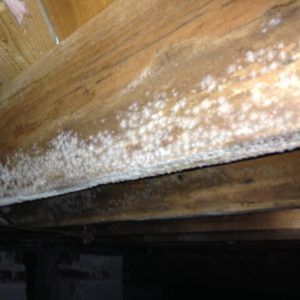
What you see: White fuzz or brown/black spots on floor joists, a mushroom-like growth on wood, boxes that smell like a cellar.
Why: Ground moisture evaporating through a dirt crawl space or unsealed slab, poor grading outside, or a dehumidifier that can’t keep up. Humidity and mold go together — the basement makes the humidity, and the humidity makes the mold.
Crawl space encapsulation and joist treatment stop the cycle.
Bathroom mold — black, green, or brown
What you see: Dark spots in ceiling corners, green or brown growth around the exhaust fan or light, pink/orange slime in the shower, grout that turns black.
Why: Steam with nowhere to go. Signs of mold in a bathroom almost always come back to a fan that’s too small, never runs long enough, or vents into the attic. Is black mold in a bathroom dangerous? On the surface it’s a cleaning job. If it’s coming through the ceiling paint, the problem is above you.
We re-route and upgrade bath fans and check the attic side of every one.
Closets, room corners & exterior walls
What you see: White or green mold on clothes and shoes, dark spots in the top corners of a room, mold on exterior walls behind a dresser or headboard.
Why: The wall is cold because it’s under-insulated or has an air leak, and room air condenses on it. Closets make it worse because nothing moves the air. Mould on outside walls (the exterior siding) is usually shade and sprinklers — cosmetic, but check the inside of that same wall.
Dense-pack insulation and air sealing warm the wall so it stops sweating.
Mold Solutions We Provide in Spokane & Coeur d’Alene
We’re an insulation company that got very good at mold because the two problems are the same problem. Nobody else in the area removes the mold, corrects the moisture, and re-insulates with one crew in one visit.
Cause-of-Mold Inspection
A full attic, crawl space, and problem-area inspection with moisture readings, photos, and a written diagnosis of why it’s growing. Same-day inspections available for real estate transactions.
Schedule online →Attic Mold Remediation
Full containment, removal of contaminated insulation, antimicrobial treatment of all framing and sheathing, encapsulation, and correction of the moisture source. Two days, start to finish.
How attic mold removal works →One-Day Zero-Contamination Removal
Moldy, water-damaged, rodent-contaminated, or smoke-damaged insulation vacuumed out with high-CFM industrial equipment under negative air — nothing tracked through the living space.
Contaminated insulation removal →Air Sealing & Ventilation
Sealing the leaks that push humid air into the attic, re-routing bath fans outside, and adding soffit, baffle, and ridge ventilation so the attic dries the way it was designed to.
Why attics get wet in winter →Re-Insulation to R-49 / R-60
Fresh Clean Fiber blown-in cellulose after remediation — naturally mold- and pest-resistant, and the upgrade is what keeps the attic warm-side-dry so the mold doesn’t return. Avista rebates may apply.
Insulation services →Crawl Space Encapsulation
Vapor barrier, joist treatment, and sealing for dirt crawl spaces that are feeding humidity into the whole house. Stops basement fungus and closet mold at the source.
Get a crawl space inspection →Our Attic Mold Remediation Process
Contain, remove, treat, correct
- Seal the attic access and set up negative-air containment so nothing enters the living space.
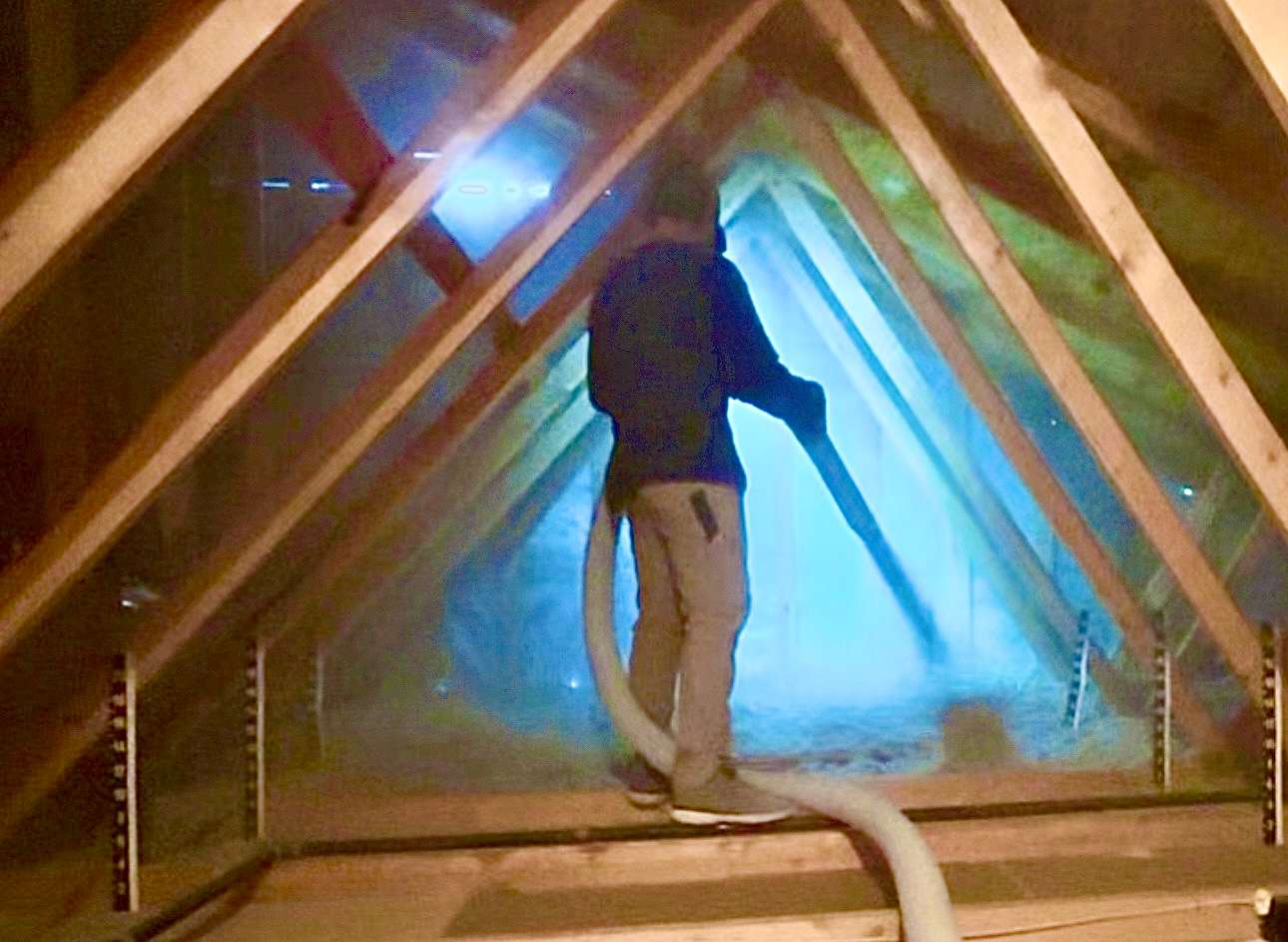
- Vacuum out all contaminated insulation with high-CFM industrial equipment.
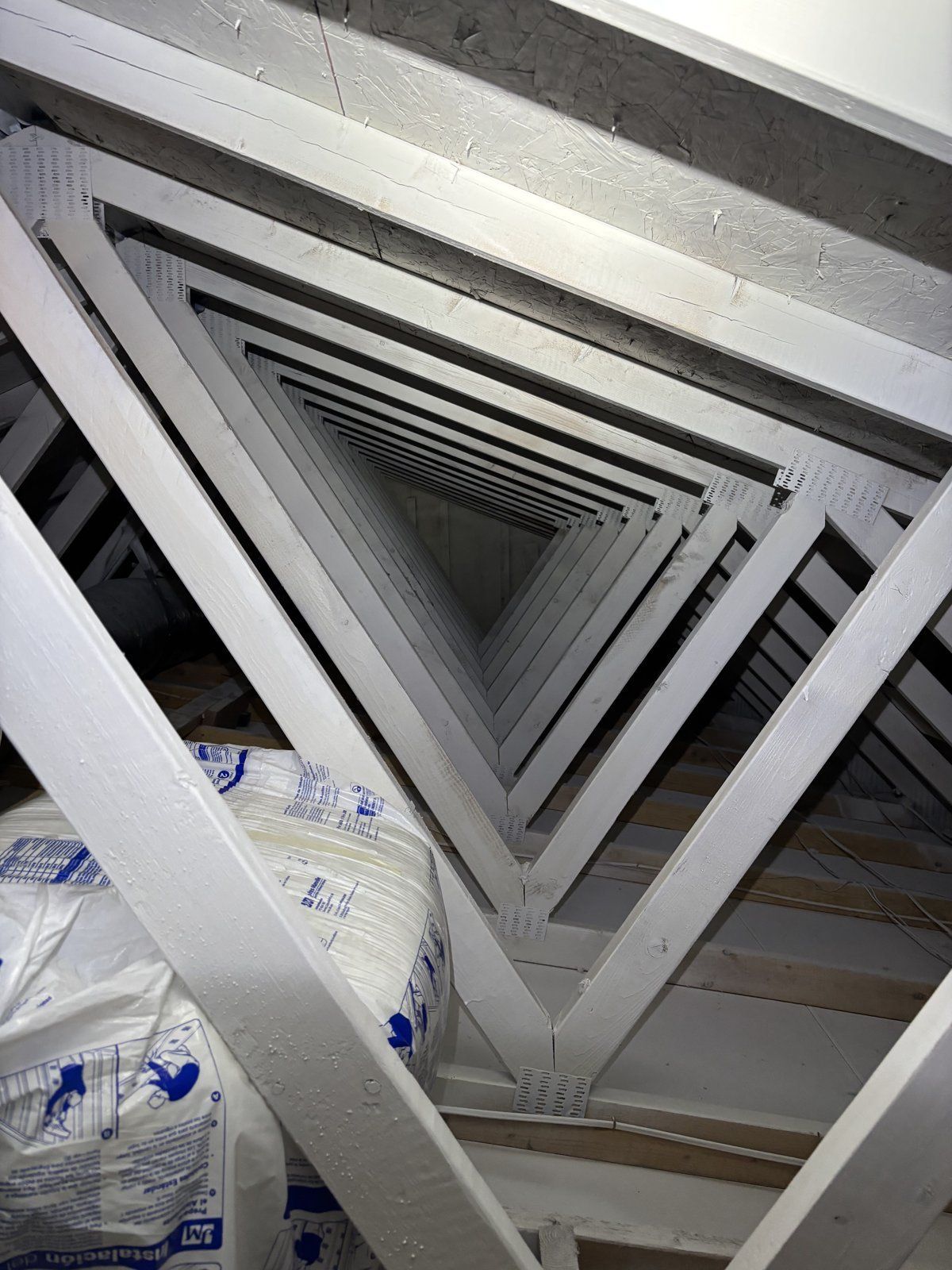
- Apply antimicrobial treatment to every rafter, truss, and square foot of sheathing.
- Correct the cause: air seal the ceiling plane, re-route bath and dryer vents outside, open blocked soffits, add baffles.
- Encapsulate the treated wood to lock down any remaining staining.
Re-insulate and walk you through it
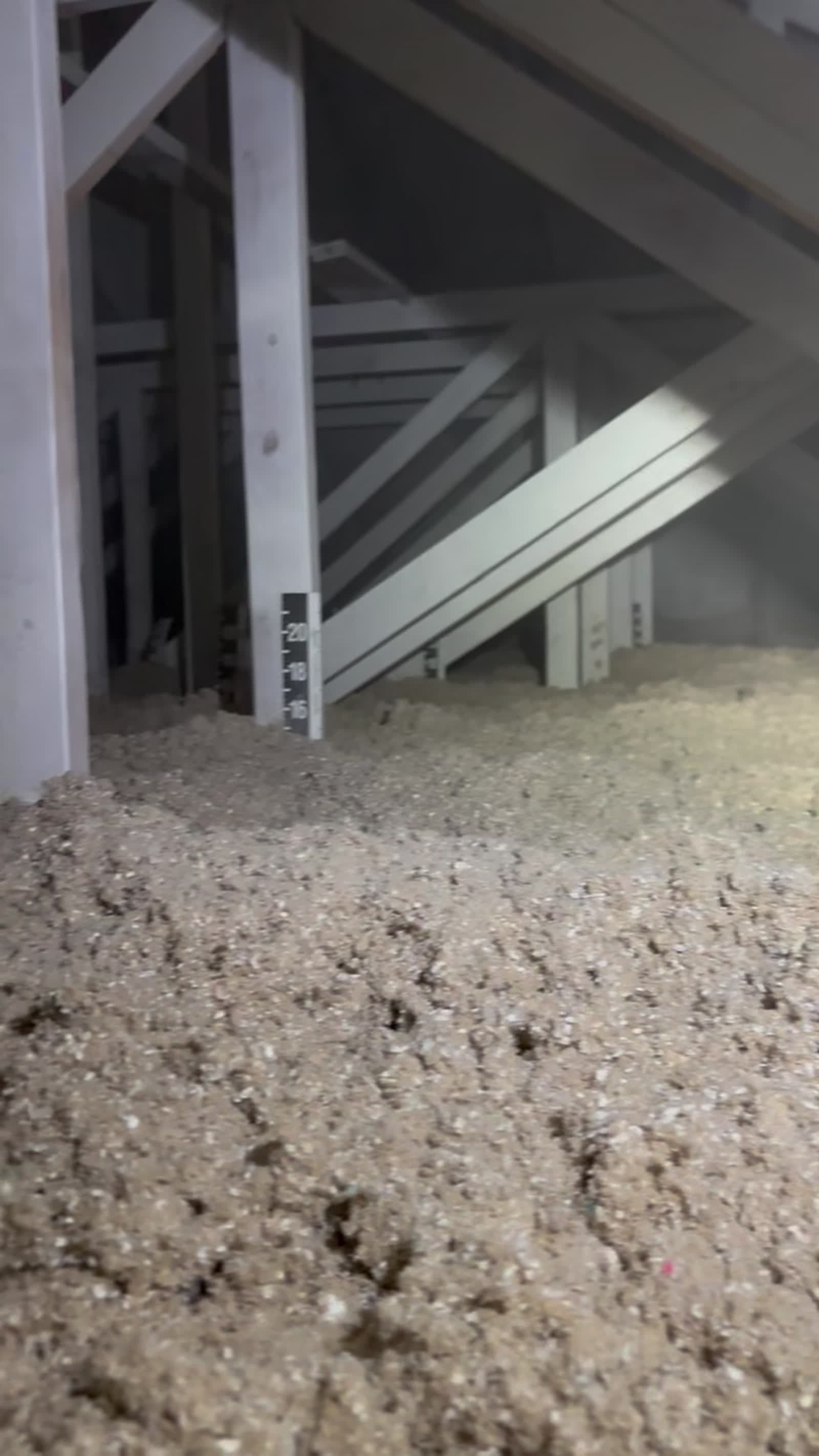
- Blow in fresh Clean Fiber cellulose to R-49 or R-60 depending on your home and rebate eligibility.
- Install attic rulers so you can verify the depth yourself.
- Photo-document before and after for your records, your insurance, or your buyer.
- Walk you through what we found, what we fixed, and what to watch for.
- Written warranty on the remediation.
We Do What We Say We’re Going to Do
Before we started this company in 2012, we called eight Spokane insulation contractors as a homeowner would. Five never answered. Two quoted a price over the phone without looking. One showed up. That gap became our business.
Most people deal with mold once or twice in a lifetime, in the place where their family lives. So we answer the phone, we show up when we said we would, we inspect before we quote, and we tell the crew there’s no “in the green or in the red” on a job — it takes as long as it takes to do it right.
Mold Questions Spokane Homeowners Ask Us
Does mold continue to grow without moisture?
No — growth stops when the surface dries below about 60% relative humidity. But the colony goes dormant, not dead, and dead mold still triggers allergies. That’s why we remove and treat, not just dry.
What should attic humidity be in winter?
Close to outdoor conditions — a well-vented, well-sealed Spokane attic in January should be cold and dry. If you see frost on the nails or the sheathing feels damp, humid house air is leaking in and that’s your mold source.
Is early-stage black mold on wood harmless?
Small, light surface spotting on framing is common and may be old. But it’s telling you that wood got wet long enough to grow something. We treat it as a moisture warning first and a mold problem second.
Does water damage always cause mold?
Not if it’s dried fast and completely within 24–48 hours. The problem is hidden wetting — inside a wall, under insulation, above a ceiling — that nobody dries because nobody sees it. Signs of water damage in walls that’s turned to mold: bubbling paint, a musty smell, soft drywall, and staining that keeps spreading.
Do I need a mold test before remediation?
Usually not. If you can see it, it needs to come out, regardless of species. Testing makes sense when you have symptoms but can’t find growth, or when a buyer, insurer, or landlord needs documentation. We’ll tell you honestly which situation you’re in.
Can I just spray bleach on it?
On a hard, non-porous bathroom tile, sure. On wood, drywall, or insulation, bleach is mostly water — it wets the material, kills the surface, and leaves the roots. The mold returns, and the moisture cause is still there.
Book a Cause-of-Mold Inspection Today
Spokane, Spokane Valley, Cheney, Liberty Lake, Airway Heights, Coeur d’Alene, Post Falls & everywhere in between. Mon–Sun, 7am–7pm.